Subject: Andrew Neil's forensic probe versus Corbyn's ethical integrity.
One can see the difficulty of entering into a forensic question and answer program which covers the whole field of politics, finance, moral integrity and the fine tuning which goes on in all our lives as we progress through the years when the political climate and the norms of today are so out of tune from those in the past.
Andrew Neil's interview with Jeramy Corbyn was simply a well researched minefield of trip wires and who ever was in the hot seat would find it hard to survive.
The Anti -Semantic issue, which has haunted Corbyn for years, was first in line with Neil bringing up statements from Corbyn's past, a time when society was far more inclined to view others who were not of British stock, as foreigners who were different and we had the unfortunate tendency to depreciate the difference. He has found it difficult to repudiate ideas formed at that time. The TV was in those days littered with comic sketches describing what was perceived to be the character of Jewish people and Jewish comedians from America were famous for their parody of what it meant to be Jewish. This was a time before we became sensitive regarding race. The society had an image of Jewish society which encompassed wealthy exclusivity and banking. The class struggle had always considered bankers as the enemy in the struggle between 'labour' and the means of production and 'finance' which always seemed to scoop up more than it's fair share of the profit. Jewish society seemed to own or manage a fair proportion of this financial facility and therefor were cast as the villain in the class struggle. It's no use condemning perceptions. The Jews were proud of their exclusivity of being separate, of insisting on marrying only within their racial group force which only force fed the image. Today this is thought to be an anathema but in the 40s, 50s and 60s it was a prejudice held by the working class for which the Jewish community did little to counter. Corbyn having grown up in that era holds the view that the Jewish persona was in part itself to blame with its complicated views on so many things and especially in making assimilation difficult. Also the Palestinian question and Netanyahu's belligerent attitude towards the Arabs, particularly the Palestinian's, has marked Corbyn's attitude of what takes place in Israel, an attitude mirrored in many countries which today make up the United Nations.
With regard to financial matters the close scrutiny of Andrew Neil's questioning displayed the age old conflict between the suggested need for Financial Prudence, prudence which further impoverished the poor (at the same time enriching the 1%), versus 'Investment led' growth, paying decent wages and allowing growth to come through a financial multiplier, spending, which depends in the first place on sufficient numbers of people having enough money to spend. In a society which has shown real earnings stay stagnant for a decade, whilst the top 1% have multiplied their wealth many, many, many times over the questions pursued by Andrew Neil missed the point and no matter what Corbyn said ideology got in the way.
The gulf between Keynesian Economics and the Milton Friedman school of economics is as wide as the ocean which separated their protagonists. The UK and the USA have, since the end of the war, up until the period Mrs Thatcher governed the country the left and the right have been poles apart in their objectives. One seeks to include society in its financial objective the other sees only the needs of the individual.
The program was as if one person was talking Mandarin the other Swahili. Communication had broken down because the answers were written with a different perspective of societal need and under the influence of a different moral compass.
Subject: Poking the lion with a short stick.
Many of us have experienced falling out with the boss and the effect it has on our progression or lack of in later months. The boss holds all the cards and even if he is wrong his position carries far more clout in what might happen afterwards. It's even more so in the case where the boss is inclined to hold a grudge.

The spat between certain political leaders at the NATO conference held yesterday and Donald Trump might, in the setting of a public school where the headmaster is spoofed by the boys from the lower fifth be ok but when such a quixotic, irascible person as the President of the United States is made fun of then expect retaliation. This man has the ego of a rhinoceros, his strength his wealth and power have insulated him from what most of us would call real life experience and he has little or no reference, other than that of the bully. I Watched his helicopter fly overhead last night on its way to Stanstead Airport, a strange sight since in the darkening sky the silhouette of the helicopter was blotted out by what I can only describe as looking like a round multi flashing light ball flying in the sky. I suppose part of the system to deter an attack from the ground. This morning the news papers describe his mood as one of fury at being ridiculed by the elitist group Macron, Trudeau and Johnson all from posh elitist schools, he from the school of deal making instigated by his father. Imagine the harsh words and the expletives uttered in the confines of his private helicopter as he heads for Airforce One and home to the White House their surrounded once more by underlings who smooth his ego, he settles down to getting his own back.How this will pan out, who knows. Already upset by Macrons unilateral decision to charge the American Tech Companies 3% tax on the profits made on sales secured in France, a move which has been on the back burner in the EU because of the fear of American retaliation, will inevitably attract high tariffs on French goods entering the US. Wine and cheese have already been earmarked but after the conference I would expect more things to fall under the draconian Trumpian hammer. It would have been interesting to be a fly on the wall as the NATO Secretary General, Jens Stoltenberg and Boris Johnson waited, like two uncomfortable schoolboys outside the Headmasters Study awaiting their punishment as Donald failed to appear for the photo shoot. Each of the leaders had promptly appeared on cue for the obligatory photograph but suddenly there was a break and as Stoltenberg and Johnson nervously kicked their heels waiting for the Mano Mano to turn up, below stage the acolytes fed them the info would he wouldn't he. Perhaps he had gone to the toilet, perhaps he was having trouble with his hair but eventually, unruffled he appeared, shook hands, paused between the lesser people and galloped off eager no doubt to get back on the helicopter to find out how the impeachment hearings were progressing.I wonder how his Twitter feed is this morning, debating his protestation of the way he was treated. I wonder how his chess pieces of those who are enemy or friend were moved around with a note attached to each that detention would not be enough this time and expulsion a more appropriate method of showing his displeasure.The old adage, " If you don't want to be bitten, don't poke the lion with a short stick " must apply.
Subject: Julian Assange.
We have news and we have false news but we don't have is any way to define, which is which.
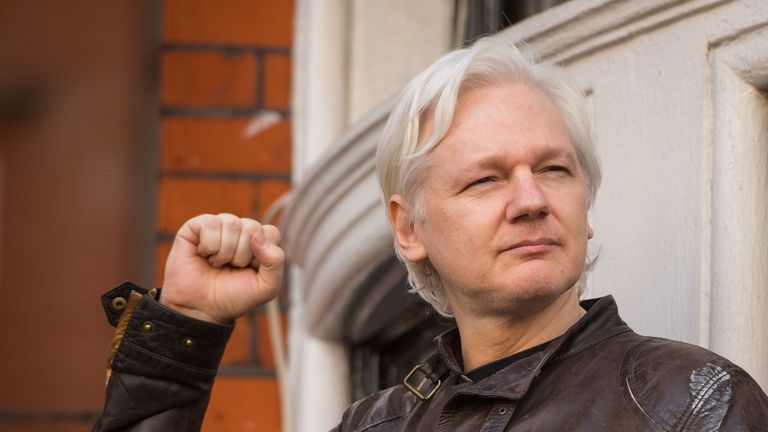
Julian Assange is being kept in Belmarsh Jail awaiting a decision about his extradition to America to be tried for releasing information to the world regarding Americas wrong doing. Assange was initially arrest for a sexual claim made by a woman in Sweden, a claim which was eventually dropped once the British police had secured him from the security of the Ecuadorian Embassy. Now having technically served his time for claiming immunity in the embassy he is still held not on Swedish charges but on the say so of the Americans. What happened to our once proud claim to being incorruptible, untainted by pressure from other governments who might not be so interested in the finer points of law and who have some of the most draconian sentencing regimes when compared to ours and the European model.
Guantanamo Bay Prison may be out of the limelight but it still incarcerates men for unspecified periods of time, without trial, kept in medieval conditions, using water boarding as part of their interrogation methods, (a euphemism for torture). It's a cold fact that the Americans, by still practicing the death penalty and having life sentences which mean a lifetime spent in prison, rank with the Arabs, the Russians and the Chinese in practicing, not only the barbaric act of 'state murder' but incarceration without preroll until the person dies.
Is it any wonder Julian Assange is terrified of being handed over to the US. His crime after all was to reveal the truth and that from an elitists governing class's point of view is untenable with so much to hide.
How can our judiciary with all its perfunctory checks and balances stand by and let this happen. Is it purely political, part of the Brexit package our subservience to the Yanks who won't let the wife of one of their diplomats come over and face trial for a hit and run killing. Are we so supine, so lily-liveried so in hock to a trade deal that we fail on the most elementary value which we used to proudly stand for, our unequivocal belief in the supremacy of the law, a system of jurisprudence we pioneered back way before America was discovered. Have we no backbone, must we value everything in terms of the profit we may receive, do we simple know the cost of everything and the value of nothing.
Subject: Cherishing what makes us the same.
We live in interesting times. This years Turner Prize, a price offered to artists in Britain for the best artistic presentation was turned down by the 4 nominees on he basis that you shouldn't choose which was better then the other, that all their work had equal merit and deserved to receive equal acclaim.In a world of winner takes all and first past the post politics where everyone other than the winner is excluded this act of rebellion towards the system has set the cat amongst the pigeons. We have this ethos in some schools where winning is nullified by awarding prizes to everyone and whilst it seems to people of my age and upbringing that there are winners and losers across society, it is rewarding to see four potential winners of a prize which carries a substantial monitory reward refusing the prize on the grounds that for one to receive the prize was discriminatory and that each diverse work had its own value which shouldn't be judged against the other. It could be argued that in entering a 'competition' the assumption that there would be judging and analysis of which was best meant that they were wrong to renege at this late stage and should have stayed away from entering but the impressive sense of collaborative solidarity was immense.The question of whether there should be winners or losers is at the heart of the ideological philosophy behind socialism and is completely at odds to the neo-liberal conservatism which has taken hold in the United States and is seeking a reassurance in this country under the direction of Boris Johnson. Winners and losers was the cherished ideology of Mrs Thatcher as she sort to shake up the complacency, as she saw it, of the British mindset. No doubt as a political leader she saw her mission to stir up and revitalise the economy by first taking away the power of worker representation (the Unions) in any labour dispute with the employers. Secondly in placing the individual over the many she re-emphasised the advantages of the class system and money over a lack of it. She illustrated the advantages of private education and the advantage of privilege. Her destruction of large swathes of the North by destroying, as they see it, the social cohesion which bound them together and by disembowelling large parts of the industries which worked in the north through government discouragement of financial and investment in those industries.Winners and losers. When we see little Johnny's face cracked with disappointment at not receiving a prize, any prize, even the prize for trying it seems that the system is wrong. We are all winners and losers in so many ways that we should be encouraged to look under the mantle of what is taken for success or failure and reexamine the person we are judging, not only in the light of the new BMW but perhaps the effort he or she puts in to caring for their family and the larger group around them. The institution in the Queens honours list to include the 'dinner lady' or the 'postman' who have been nominated by their community is a move in the right direction and should be publicised more. The society or community which Mrs Thatcher so famously disparaged in favour of the individual is our strength not our weakness. The men who ran and chased and disarmed the terrorist on London Bridge, the help flood victims give to each other and the population at large in its never ending charity giving to others, both at home and overseas is the real measure of a society not the bravado of individual success, no matter how important to the individual. How do we reawaken the importance of community away from that of the individual. How can we re-equip ourselves with the sense of the people around us, their similarities rather than their differences. We should stop looking to see what puts us ahead and makes us special, rather cherish what makes us the same.
Subject: London Bridge
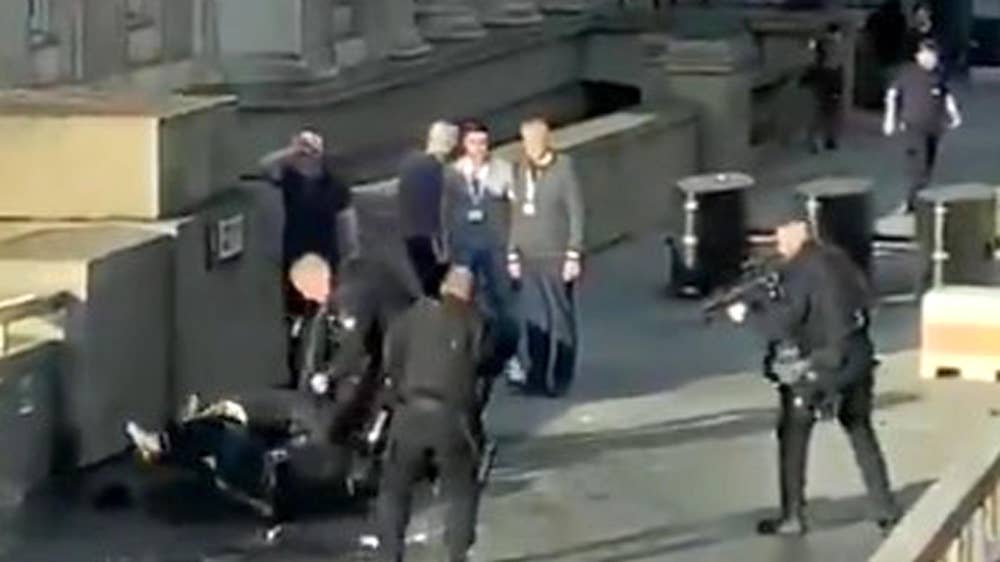
Why do we assume that the police and security services can prevent the issue which occurred on London Bridge yesterday. Terrorism is a phenomena which came to light during and after 9/11 when Al Qaeda became active in its attempt to destabilise society in the West. Parts of the East and Middle East have been destabilised for decades with religious conflict but the focus has now shifted to include those areas laying outside the religious spectra, encompassing the historical actions of the west in their quest to find and exploit the East 200 years ago. Our actions then have come back to bite us but it's hard to see how largely political incursions, mostly benign, often with infrastructural improvements which were taken onboard and are sill used and practiced by the countries from which terrorists were either born or is the home of a father or grandfather. Has the hate and the enmity been a part of an individual's story a story founded on the stories told down the line and made worse because of the hatred preached towards the infidel, the outlier, the heathen who lives outside the faith.If so there is no healing the rift with people who take what is said literally. The Quran is full of interpretive language as is the Bible, it was part of the storytelling and the use of the parable to illustrate a deeper meaning but which, because of the danger of interpretation can lead the listener into a dark place.Every day on the domestic scene people are murdered, sometimes accidentally some times with malice but it rarely gets reported. The conflict in the home and on the street which spills over through the heightened stimulus of alcohol or drugs is common in some parts of our urban sprawl where life has become difficult and meaningless. It's not the agonising Township trauma of South Africa where life is problematic but it is a life seen in comparison to the media presentation of consumerism, a life which has little to offer when you are poor.The man on London Bridge had a knife (how many of our urban youth carry knifes) but it seems as if his tipping point was perhaps living amongst 'the other, the infidel' his crusade was to make his presence felt in the only way he saw open to him, through violence. His friends of similar persuasion are a potential threat and just as the school bully sometimes becomes a wife beater or a thug at the football match, so the twisted philosophy of finding fault with others for their religious persuasion rather than with oneself become messianic and the consequences of ones actions become irrelevant.The brave souls who wrestled him to the ground and disarmed him were responding in the old fashioned way which we are now told we mustn't do for fear of being indicted, having taken the law into our own hands. The law enforcement meanwhile arrived to drag the last man off the presumed terrorist and then, on seeing what looked like a suicide vest, shot him.The reaction of the police and the authorities went into overdrive and that part of London shut down for hours. Having lived through the times in Johannesburg when bombs were part of the ANCs arsenal to terrorise and destabilise the cities we were soon allowed to get on with our lives by playing down the facts with very few cordons erected and as little fuss as possible. Whether it is more correct to accept that life and limb will always be at risk, even in the comfort of our own homes, and not try to create some illusory paradise then the more we will all be accommodated to the changing times.
Subject: The welfare.
Is the Benefit System 'a right' in the sense that clean uncontaminated water is a right. Should we anticipate, on a gross scale, the needs of people, especially for those who have not the means and should we, as a society provide those means. Is our concept for support not dependent on a persons 'real need' and is it not sensible to evaluate the individuals specific need and not necessarily presume, using some sort of box ticking exercise to find a societal bottom line.Should a society act as a backstop, a bank of last resort or should it be tougher in its analysis, more dependent perhaps on age or the persons willingness to help themselves.Of course the people who operate the offices where welfare claimants go when they they need advice are under pressure to identify the difference between 'real need' and the 'chancers' who in any system when money is handed out if you fit a certain profile will develop their profile to suite the needs of the system.From meagre beginnings and during a time, long ago when to receive welfare was a secret you kept to yourself we now have a huge industry where people are profiled like a commodity and drawn into silos of educational attainment or a post code lottery which makes assumptions, often incorrect about the people living within them.It wasn't always so. Before the war there was little help available and people worked 'hand to mouth' as they say with little anticipation that things would get any better. After the war the politically motivated Acts were enabled to cover social security, employment benefit and the right to healthcare which all became the shining achievement of the first Socialist Government. It took away the frightening insecurity of being sick or out of work coupled to the need to continually provided food for the table. For the first time we seemed to usher in an age of attempting to respect all members of society regardless of class and from these relatively small beginnings, a hydra has grown to encompass illnesses which were then unknown and a plethora of new gender and inter-marital combinations, each introducing a new set of claimants. Women no longer think it shameful to bring a child up on their own and men are no longer shamed as they were when I was growing up for not providing for a family. Work which once was plentiful with people spending their whole life with the same firm now see employment as short term and in many instances so poorly paid that the money is insufficient to meet even the most basic needs. With the lack of any contractual relationship between employer and the employed, work is dependent on the ebb and flow of demand, a phone call "come in on Friday, but nothing until then" becomes common.The insecurity of life at this basic level has brought with it both a mental strain and a physical strain which fills the doctors surgery with sad and weary people. Poor diet eaten in a perpetual rush, the increasing use of stimulants to find some sort of pain free plateau to compromise their actual reality has taken its toll and the only backstop for this fragmented, unhappy society, has become 'The Welfare'.
Subject: What is Socialism
What do we mean when we state, 'rebuild a country to meet the needs of the many not the few'. How do we convince the many they are not the few. How do we highlight the fact that the decades long dismantling of much the many had assumed was in place to support them, like a raft of sureties that established some sort of baseline they could rely on, is no more."Trust me" they are not true says Boris when he denies the words on the page of documents tabled at meetings between his people and their equivalents from Donald Trumps American camp discussing the changes to patenting laws by which the American pharmaceutical companies are protected far longer on the patents covering the life of their drugs which prevents the generic copying at the end of the patent with a accompanied massive reduction in price. If as part of a trade deal the Americans insist that Nice, (the organisation which argues over the price the NHS pays for its drugs) accepts some sort of quid pro quo, then one of the factors influencing the cost of keeping the the NHS afloat will skyrocket. Perhaps we will be forced into having an insurance based system where people will pay throughout their lives the equivalent of a hypothecated tax to cover them when they need medical attention. Like any privately run system the choice of inclusion or exclusion will be solely for the owners of the company to make. High risk out low risk in. Perhaps the system will be designed for members to access the medical system only so many times a year providing a disincentive so that people will think twice before they go to the doctor. Perhaps those on Benefits will be given a cut price service with some things offered and others not.
It all has a sensible ring to it until you understand that human beings are under the spotlight and that part of the magic of Aneurin Bevan's philosophy that everyone could access the health service free at the point of need was based on his experience of the prewar medical profession and the skimpy services it provided to the bulk of the population before 1940. With an almost messianic passion Bevan broke the mould turning the profession on its head saying healthcare should be free.His vision of society, along with others in the Attlee government of 1945 was a wholistic one, light years away from Mrs Thatcher whose proclamation that individualism and self aspiration were the key and that 'Society' was to take a back seat from now on. Her aversion to Socialism has been the mainstay of all governments from then on, including that pseudo Labour government, rebranded New Labour. Not without reason was Tony Blair described as 'Son of Thatcher' or 'Thatcher Lite'.Ideology is a system based on a series of ideals. Ideals are by definition not real or actual, but a metaphor for something you wish to be attained. Socialism is also an ideology, it's an attitude of mind, it's an 'encompassing' passion rather than a passion to exclude. It's the opposite to exceptionalism and rather claims the right to include others and take the society, warts and all, as its primary concern.In today's dissembling, falsifying, narcissistic world where people see life through only the prism of their own needs, is it any wonder that an elitist like Johnson gets so much traction. If everyone's goal is to win the jackpot and sail off into the blue yonder leaving behind the people you know for the option of new friends found in the bar of the Hilton Hotel. If we have become so shallow that only our own needs are counted and the rest can fend for themselves, then your Boris's man and as he hoovers up the products of the Thatcherite ideological persuasion so we will move ever closer to a dystopian construct favoured by Mr Trump and his Wall Street buddies.