Where and when does the individual become submerged by the influence of what is going on around them.
At birth we are drawn into our mothers obit by our need to feed and receive the protection a mother provides. Gradually we sense the family, the father and our older siblings as we begin to recognise the part they play in our lives. Slowly these relationships expand to include the friends of our brothers and sisters and on attending school, the children in our class. And so it goes on this ever expanding world of relationships. Eventually we have special friends and then someone very special who we decide we want to form a bond with. Children come along and new bonds are formed with our kids.
Life has been a succession of interconnections some of them rewarding some of them painful couplings but within all these interconnections the 'individual' is submerged in the social role of responsibility to society at large.
Are we happy to be the person who is always playing the part thrust upon them or do we some-times wonder what became of the 'inner you' which is there but remains out of sight, usually content to play second fiddle for convenience sake.
As we adjusted our desires for the sake of others, and for the sake of our conscience, do we miss a great opportunity. The "old maid" who relinquished her life to look after a parent is at one extreme but there are so many people who get drawn into the social construct of doing the "right thing" that their lives are in danger of floundering before it has begun.
Socially we are told that an person who is independent and some would say self centred, is a lesser person than the time warn carer but is that just a social construct fearing the loaner because they seem self sufficient. And does that self sufficient person also have to be selfish ?
Well they could be but is being selfish a bad trait if it only means that the need to bond is weaker.
If we were all more independent would we grow to better recognise our own potential and not fail in the 'second guessing' which is a necessary part in the need to compromise as we try to get along.
Thrusting the child away into boarding school at an early age is, (by the class which takes most of the prizes and surrounds itself with most of the material benefits), an attempt to distance the child from the automatic parental backstop and make the child 'independent'. Success of a sort is bound up in separating the child from his environment and supplementing the family with a larger family of peers on which other wider relationships help foster gains in later life.
To the devotee of a close loving family this is a myth, where the bond with close and extended family is itself the bedrock for a happy secure life but as we atomise our family into wider and wider orbits I wonder if our current template isn't out of date.
Wednesday, 11 November 2015
Monday, 9 November 2015
And so they marched again.
And so they marched again today, passed the Cenotaph with their rows of medals showing the campaigns as a mark of their courage.
Of course it was not seen as courage by many of them. They had been conscripted from civilian life to do their duty for Queen and country, for all of us and what ever the task they were ready.
The men and it is largely men are getting older as the great upheaval of World Wars recede into a distant memory. The men have grown old as their lined faces bravely look to the front, their drill sergeants might have a thing or two to say about their demeanour but never their resolve. The Gurkhas march passed and and the striking statistic that if you had a minutes silence for each of the fallen Gurkhas you would have silence stretching for over two weeks.
Each group as they passed the Cenotaph handed their wreath to the people who placed the wreath around the base of the Cenotaph. The Marine Commandos and the Parachute Regiment, the Maintenance and Stretcher Parties, the Field Hospital Staff, the Nurses and the Wives and Daughters of men fallen. One wonders as the band lays out its matching beat what these women think of their loss, surrounded by the pageantry and the memories of those who survived, why didn't my man survive and come back to me must be the perennial question.
The leaders and the politicians who acted on behalf of the nation in sending these men to war are segregated with the Queen and her entourage. Interestingly the leader of HM Opposition Jeremy Corbyn, a pacifist is down in the crowd looking on. Truly a man of the people.
The march draws to an end, reunions and a drink in the nearest hostelry and then away home to rest those aching feet and remember the comradery, often missing today in civvy street.
War Criminals
Today is Remembrance Day and it's fitting to look behind the marching men and ask the question. Why
1911 - 1914 the Great Powers like peacocks fluffing out their plumage began the diplomatic dance which was to lead to war.The alignments Germany with Austria and Italy, France with Russia and Great Britain, each relying on the other, each caught in the trap of being forced to go to war on behalf of the other. The gigantic forces which were involved, not least the financial strain where whole economies were distorted by the rush to rearm.Like a dance the steps forward or backward were balanced on the proviso that ones partner was also in step as the telegrams passed between the embassies informing or demanding. This war dance had only one conclusion.The delicate balance of power which was supposed to provide a brake on hostilities only seemed to provide more heat as the governments considered each action and reaction with growing alarm. Conversations become shrill and threats begin to fall like confetti. There is a moment in mans affairs when things seem to tip over the edge and the hubris which was locked away beneath each nations history was brought out and aired. The slights of the past and the elemental hostility some nations have towards each other were at play, waiting for only a spark to burst into flame.
Sitting at home the people, on either side were fed a diet of propaganda entrenching their dislike encouraging their open hostility.The people are the fodder, the people are the chaff they are the tinder that when the conflagration begins are fed onto the fire, a fire which is so preventable but like unruly children with matches, our leaders strike, each unable to fully imagine the consequences of his action.Clever refined men, well versed in the arts, sensitive to the pathos of historical example, still they continued to play the diplomatic roulette which, little by little brought us all to the brink and over.What is it in men that they can commit their fellow man to such atrocity. Is it a blindness sitting in the great Chancellories surrounded by acolytes, removed from the 'man in the street' who would in the end pay the ultimate price, his life.Was it only a matter of a calculation. Our munitions and our men against there's ?Did the arithmetic define the argument, if so then all our leaders are War Criminals !!
A digital library
The plausibility of
the Churchillian phrase, the persuasive use of language are captured in a
million bits and bytes in my iPad, ready to enjoy and be entertained at
a touch.
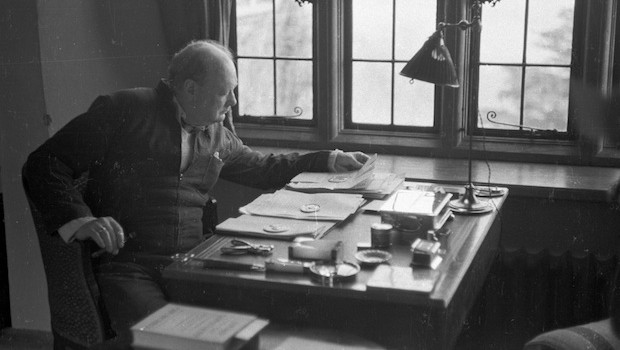
I have just downloaded Churchill's "The World Crisis" in three volumes, following the excellent book on Gallipoli by Alan Moorehead. I needed to explore the wider landscape surrounding the disaster. The 'World Crisis' now sits like an undigested meal in my electronic Library alongside my Dickens, Dostoevsky,Richard Hoggert and JB Priestly, to name but a few. What a compendium what a treasure.
It is at times like this that I wish I had more than a score of years left to read.
I have just downloaded Churchill's "The World Crisis" in three volumes, following the excellent book on Gallipoli by Alan Moorehead. I needed to explore the wider landscape surrounding the disaster. The 'World Crisis' now sits like an undigested meal in my electronic Library alongside my Dickens, Dostoevsky,Richard Hoggert and JB Priestly, to name but a few. What a compendium what a treasure.
It is at times like this that I wish I had more than a score of years left to read.
Reading
"good" books by famous authors is not simply escapism but rather a
learning process about events, or characters who resemble people and
issues which you have an interest in. When written in a style they bring
the events to life.
What
is the point of Churchillian history or Priestly's observation on the
plight of working class Britain in the 30s you might ask. Dostoevsky
gloomy illumination of people living in the Russian under the stress of
an authoritarian society. Tolstoy's magnificent portrayal of that other
segment of Russian society, the Russian aristocracy with its men going
off to fight the Germans and the women queuing up to marry who ever
survived.
Good
writing shines a spotlight, it illuminates and informs and in our
armchair we learn and ponder the lifestyles of others. It is not
escapism into a phantasy land but an introduction into the wider
society, a society we have no hope of meeting but in Churchill's case,
we meet by proxy the movers and shakers of his time. Remarkable insights
into what were household names if you were around at the close of
Victoria's reign, names who were on everyone's lips as we and the rest
of Europe trudged slowly, inevitably towards conflict.
If
for no other reason one is able to view that landscape from the
viewpoint of a contemporary, be it in Russia, Middle Class England or
the Aristocracy. In no other way can we grasp at how things happened,
things which effect us today.
Britain
for instance was reduced by both world wars to virtual penury. The
working class at last began to have people who described their lot like
George Orwell and who in their writing instilled in the populous at
large the hope that something had to be done. The scope of the Russian
story, it's impossible to imagine size and geographical variation. The
hardships made worse by class and politics brought out in the writing
such deprivation, such pathos. Solzhenitsyn's books describing the Gulag
are heavy with the weight of authority, his Cancer Ward is a difficult
read but he brings out the character of the Russian under extreme stress
and an almost detached dehumanisation which working in the cancer ward
brought to the doctors and staff.
Yes we all need to get out more and reading is the cheapest way I know !!
To be or not to be.
As one gets older it's inevitable
that time takes on a new significance. One becomes acutely aware that
time is finite and the announcements on the TV, that such and such will
come on stream in 20 years is being addressed to a different audience.
The time you are awake and active set against the time you are asleep and passive can lead to an obsession, of staying up, or going out, of staying fit and eating the correct diet since the focus is on the time you have left.
It's a state of mind which is prevalent in the old but hardly a concern up until the 60s.
Work and the continuance of a routine that has engaged you for most of your life is suddenly no longer a prop to turn to and as you drift off into the twilight, the fragility of your very existence become acutely apparent.

Should one turn the volume up a notch and party ? Should one go out and search for the good time once again ? The food you put in your mouth, which apparently adds or takes away a year here or there, or the time you spend walking the extra mile, is the outcome worth the effort ?
There is a time and a place for everything.
In your teens and twenties the search for companionship was high on the agenda. In your thirties, forties and fifties the children are such a focus of your time and energy that the time flys as you live their lives through constant worry and involvement.
In your sixties you are in 'absentia', even at times, 'persona no grata', hanging on by the skin of your teeth as they go off and cleave their own path in life.
The question tonight is "what is out there in the wide world for me". What event would bring me alive and set the corpuscles flowing ?
A rock concert, with music that you know, might do the trick but the "action" would really be happening all around since you would be invisible to the others.
An ocean voyage or a trip to some remote part of the world to gawk at the natives.
A house party would be ok but you would be forced to wish they would all go home before they were ready.
There are things which would test your resolve and yet not rely on others to play a part.
Painting, photography, and of course writing are all creative and wholesome but the spark which set one alive in your previous incarnations is no longer the driving force and the satisfaction in coming to terms with that fact, is perhaps the important lesson still to be learnt.
The time you are awake and active set against the time you are asleep and passive can lead to an obsession, of staying up, or going out, of staying fit and eating the correct diet since the focus is on the time you have left.
It's a state of mind which is prevalent in the old but hardly a concern up until the 60s.
Work and the continuance of a routine that has engaged you for most of your life is suddenly no longer a prop to turn to and as you drift off into the twilight, the fragility of your very existence become acutely apparent.
Should one turn the volume up a notch and party ? Should one go out and search for the good time once again ? The food you put in your mouth, which apparently adds or takes away a year here or there, or the time you spend walking the extra mile, is the outcome worth the effort ?
There is a time and a place for everything.
In your teens and twenties the search for companionship was high on the agenda. In your thirties, forties and fifties the children are such a focus of your time and energy that the time flys as you live their lives through constant worry and involvement.
In your sixties you are in 'absentia', even at times, 'persona no grata', hanging on by the skin of your teeth as they go off and cleave their own path in life.
The question tonight is "what is out there in the wide world for me". What event would bring me alive and set the corpuscles flowing ?
A rock concert, with music that you know, might do the trick but the "action" would really be happening all around since you would be invisible to the others.
An ocean voyage or a trip to some remote part of the world to gawk at the natives.
A house party would be ok but you would be forced to wish they would all go home before they were ready.
There are things which would test your resolve and yet not rely on others to play a part.
Painting, photography, and of course writing are all creative and wholesome but the spark which set one alive in your previous incarnations is no longer the driving force and the satisfaction in coming to terms with that fact, is perhaps the important lesson still to be learnt.
Gods Will
The downing of the plane leaving Sharm El Sheikh bound for Russia has again highlighted the increased activity in that section of the Islamic world which sees itself in the forefront of the Islamic tension with the none Islamic world.
Politicians are keen, as are the Muslims settled in this country and who have acclimatised themselves within the none Islamic society to play down the claims of the Islamists in the Middle East.
Politicians have to manage the potential tensions, many of them of their own making. Having persuaded their electorate that mixing people together will have the effect of of eradicating differences, like a stone worn smooth in a fast flowing stream, (differences which define our initial tribal affiliation) and create a smooth homogeneous nation.
The experiment although succeeding in some quarters has not done so where large clusters of people, with significantly foreign customs have settled and become the salient feature in the area.
This is particularly true where religion makes a splash of identifying its particular congregation, specifically at worship.
The "them and us" tension was true back in the day when 'Church of England' worshippers would make a display of their godliness on Sunday, dressed in their best, bible in hand they exuded the special relationship they believed they had with the Creator, leaving the none -church going public languishing with their News of the World and the Sunday Pub.
This of course was a light touch form of segregation. Islam is a much more serious contender to peace in our society and in the world in general.
Any "collective" is more powerful than the individual, one of the strong arguments for collective bargaining and when the meetings are stipulated in terms of "religious observance", determined by God, then the effect of a consolidation of views, puts the Islamic community in a very powerful position.
The rise of Islam has ebbed and flowed over the centuries. At one period it broke onto the shores of Europe in Spain and colonised much of the country. Only when that other religious monolith, the "Catholic Church" was able,to drive the Islamists back into Africa could, what we call European values find their place in the indigenous society.
All the monolithic religions found their origination and substance in the same area of the Middle East, amongst the barren lands of Palestine and countries close by. The Arabic society with its patriarchal structure and it's hard line strictures regarding the tribe and it's allegiance to tribal custom were the crucible into which the three great religions were formed. The way of life was harsh and the attitude of the people growing up in the region was far different to the European mind set. Marrying these two societies has always been a near impossible task and we see the fundamental differences even in what is going on today in for instance Egypt.
National boarders, the barriers to entering a region, were an antidote if one were needed for people to move from one relatively alien society to another. But today we see the inability of boarders to hold back a determined invasion when it is not clothed as a military adventure. Police are helpless as the tide of humanity struggles over the tracks and roads to reach what to them is a sort of Nirvana after the hell hole which has overtaken Syria, Yemen and Afghanistan.
Most of these people are Muslim and under normal circumstances this would be irrelevant but in the background on the territory which these people are leaving behind, there is a vicious war being fought between on the one hand the various Islamic groups and on the other the none Islamic people who inhabit those parts of the Middle East.
Religious ideology is the main driver of these Islamic groups and it has a fervour which no amount of diplomacy can disentangle. There is no middle ground. The question is, does that religious fervour find resonance in the Muslim living here ?
Do we have to fear our own subset of Islamic followers on the basis that the religious war, a Jihad which is being waged in Syria and Iraq does not have the same connotation to some groups of believers in this country and what would tip the balance to see the numbers of supporter swell. Jihad as it is discussed in the Koran is a "struggle" between for the mind of its people and those it's people come into contact with. The defining position is, them and us !
There is only one faith. There is only one outcome. Allah has determined the boundaries of his faith to include all men and women since he created all men and women and if you are a believer then your ultimate wish has to be Gods will.
Guy Fawkes Night
Guy Fawkes night is on us once again and the dog lovers will be cursing the fireworks.
Guy Fawkes was an Irish Catholic who decided to blow up Parliament, the seat of the Protestant opposition. His project was far advance before someone tipped of the authorities and as is the attitude we have in this country, we celebrate one of the most famous terrorist in history.
Today's event is a far cry from my own experience when I was young. Today it's an organised event specifically the fireworks display, by adults. In my day it was a children's event to which we invited our parent.
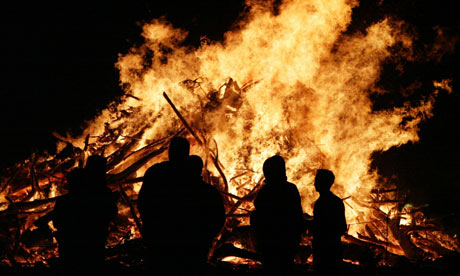
Throughout September and October the kids were out in the wood collecting anything which would burn. We went from house to house collecting old furniture and anything which we could pile on the pile of wood which was growing week by week. Adults took no part in the building of the fire and we were free in those days to go out in the evening to go "progging".
As the pile of wood and second hand furniture grew, and in the village I grew up in, there were two fires, one in the upper village and one in the lower village there was a fair amount of competition to see who would have the largest fire.
November the 5th arrived and in the evening we were joined by the adults to light the fire.
An effigy of Guy Fawkes sat on top of pile and as the flames grew he was burnt and our excitement grew as the fascination of fire drew us to stare and marvel at our creation.
Fireworks were not controlled by the 'grown ups' and one of the slightly dangerous but fun things was to hold the banger (small explosive fireworks) long after the fuse was lit in an attempt to throw the banger into the air for it to go off whilst it was in the air. Sometimes you misjudged the timing and the thing went off in your hand but apart from a stinging sensation no real damage was done. Rockets and Roman Candles were the more expensive fireworks and everyone was setting theirs off independently. There was no collective firework display as there is today.
The H&S people would have had a fit but we had the independence in those days to express ourselves in all kinds of ways. Part of growing up was to expose yourself to risk. There was no heavy handed protective organisation (H&S) which has now grown into a monster involving itself in every aspect where there is risk irrespective of how small and benign.
Yes occasionally you hurt yourself but it was a learning process which today's cosseted children can only read about on the plethora of warning material covering virtually everything !!
Subscribe to:
Posts (Atom)