Wednesday, 9 December 2020

In the beginning


Subject:In the beginning.


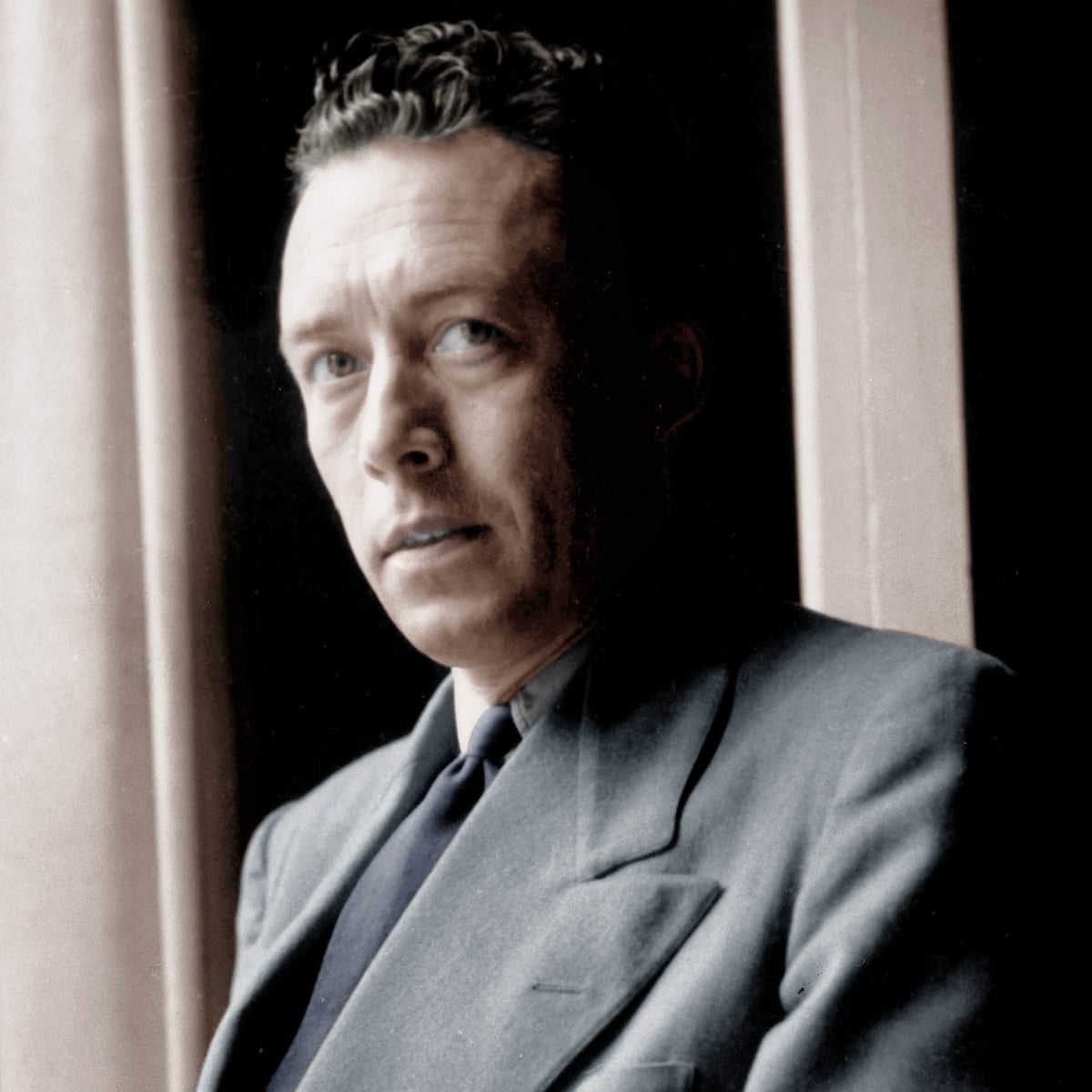
"Beginning to think, is beginning to be undermined". (Albert Camus)
It's a potent thought, that the more we think the more undermined we become because the things we most often think about are out of reach and therefore impossible to resolve. Of course it presumes 'we think' so as to understand and by understanding will have gained knowledge from which we can build further understanding. The concept that understanding is a basic function in life is part of our route into it. We are schooled to pick up the concepts our tribe or our environment wishes us to have to be a useful member. We are coached to be dutiful citizens but in being dutiful comes the assumption that someone else got it right in the first place. 
If we believe our thoughts are uniquely ours how can we be so coopted by others. Surely the path we took to our own understanding is the only important conclusion since it's ours. 
Our lives are a succession of optimistic awakenings, things to do and people to meet but in amongst all this conformity lies our self opinion, not only of the others we meet but of ourselves. This bubble of 'self' with its prejudice and optimistic/pessimistic self awareness which runs through everything we do, is its own filter of approval, our own self centred image of right and wrong, good and bad. 
If the world we colour in with our own beliefs was actually so different when seen through the the eyes of the guy standing next to me it would make a mockery of my own surety whilst at the same time, adding myriads of other possibilities to the one I hold. Of course it could be a minefield of obfuscation, a miscellany of tastes, an ideological mismatch which would drive us mad. Far better to be wrong in our own wonderland of fixed images and assumptions, assumptions based on assumptions, for which we mark  those assumptions as facts, gleaned from a lifetime of thinking.
If we classify our lives as a habit, an absurdity of 'not knowns' then living too becomes absurd in the context we think of as living. The purpose and our achievements are all illusory, they are chance happenings since in so far as we believe we have a hand in our future clearly this is a delusion. From being knocked down by a No 95 bus on our way to work to waking up one morning with a severe pain in the chest or hearing in the morning you have been fired and our future plans grind to a halt, it all depend on things outside our control and when you think of it, what is in our control. The platform we build which gives us so much comfort is a platform based on what we have read about others and should bare as little consideration as we have of our knowledge of those people.
Our lives then are a day by day event which we embellish with stories we tell ourselves. A good storyteller will come up with something glamorous, a bad one will have nothing to add to the reality of our reality. 

"Into this universe and why not knowing, nor whence like water willy-nilly flowing. And out of it as wind along the waste I know not wither willy-nilly blowing".
"The worldly hopes men set their hearts upon turns ashes - or it prospers and anon like snow upon the earths dusty face, lighting a little hour or two is gone"

Sent from my iPad

Have faith my son


Subject:Have faith my son.

The fact that Christianity and Christians who follow the faith believe less and less in those parts of the New Testament, the parts which talk of the miracles which Jesus is reported as having performed, even 'rising from the dead' is held as a metaphor whilst at the same time, Jesus is held in high regard as a teacher of moral values.
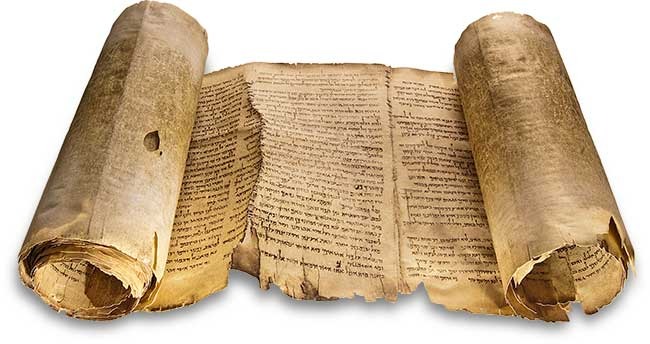
The Old Testament is full of allegory and deals much more in the mysticism of God and his creative aspect here on Earth, of mankind being created for a purpose and not just an evolutionary oddity. Being more mystical it can be more enduring since it's claims are built wholly on faith and not rational measurement. The God of the Old Testament is more fire and brimstone than a Heavenly Father which the New Testament talks about and the sense of a son of God coming down to save us is missing. The Torah is parable writ large it has no need for history or carbon dating it is 'the word of God' whilst the Christian bible is the word of a man come down to earth explaining he is the son of god. He is also flesh and blood and lived and died, his claims not withstanding, are more sociological and deal with us as a species who need guidance.
The Muslim faith like the Christian faith is focused on a man who lived, Mohamed who whilst never claiming to be the son of god claimed to have a connection to god and, as his followers attest, speaks for god. His guidance through the words which god spoke to him is the basis of Muslim analysis and conjecture as to what god meant but Mohamed's position as the conduit places him on a platform which believers fervently defend as being the one true revelation of god's will. 
Hindus trace their  their own faith back much further in a complex mix of gods who reflect the temperament of mankind in all its forms and in so doing have crafted a web or a structure which covers all form of human nature, from temptation to bliss with the Hindu interpretation firmly embedded in an Indian nations sense of devotion. 


The lore of ancient China and the societies which existed in Japan lent greater force to the behaviour of men and women in the society and therefore a culture grew around this kernel of acceptable behaviour and the Confucian hierarchy under which people were graded. The public willingness to be graded and identified in this way was the strength of Confucian continuity and identifies these extremely old centres of civilised human behaviour with our own.
Buddhism is a philosophical understanding of the frailty of human experience and attempts  to bolster us with the rigour of study and debate. It opens up the question of who we are and why we exist in a sort of Platonic endeavour to delve into the intricacies of our mind and what our mind tells us about ourselves. It places no reward other than self awareness and through that self knowledge, to better understand ourselves and the people around us.  
The non believer, the atheist, assumes that life is here in front of your nose. It's the events of the day seen through the eyes of a fellow human, not some deity or part of a progression to another better place. This is the place and this is the time to be resourceful, purely for resourcefulnesses sake, not as a path but in the moment, an awareness that you have succeeded in understanding your worth, (and theirs to you), in respect to the humans around you.


Through the looking glass


Subject:Through the looking glass.

I work up on my 80th birthday to an unusual treat. Promoted by Andrew, I joined the contributors of YouTube for a nostalgic drive around Johannesburg and the surrounding suburbs. 


There had been three postings, one in the Sandton/Rivonia area with its ‘oh so civilised’ modus operandi which wealth and overt opulence brings. The futuristic architecture  of the office buildings, the like I have never seen in Europe or even America. Like a modern Greek/ Roman symbol of who we are, these gated office blocks with their plush cars entering and leaving the secure parking areas signifying their right of passage and symbolising their importance. Perhaps the only time the occupant feels secure enough to leave their car and enter mainstream humanity as they enter the office. 

Outside on the streets there were no white pedestrians, only the occasional black person  making his or her way amongst the splendour of mans economic achievement only later to catch a taxi and return home to the very different world of the Township.
As we whisked effortlessly along the motorway I recognised the suburbs and the turn offs, it was as if I was back home. Turn left here and then right, down the tree lined avenues flanked by the four metre walls enclosing enormous gardens and equally enormous houses in which rich Johannesburg  families live and have continue to do so since we left. It was all so surreal to see this world we had junked, worried about the ability of a new governance and yet it was still here functioning as if nothing had happened. 


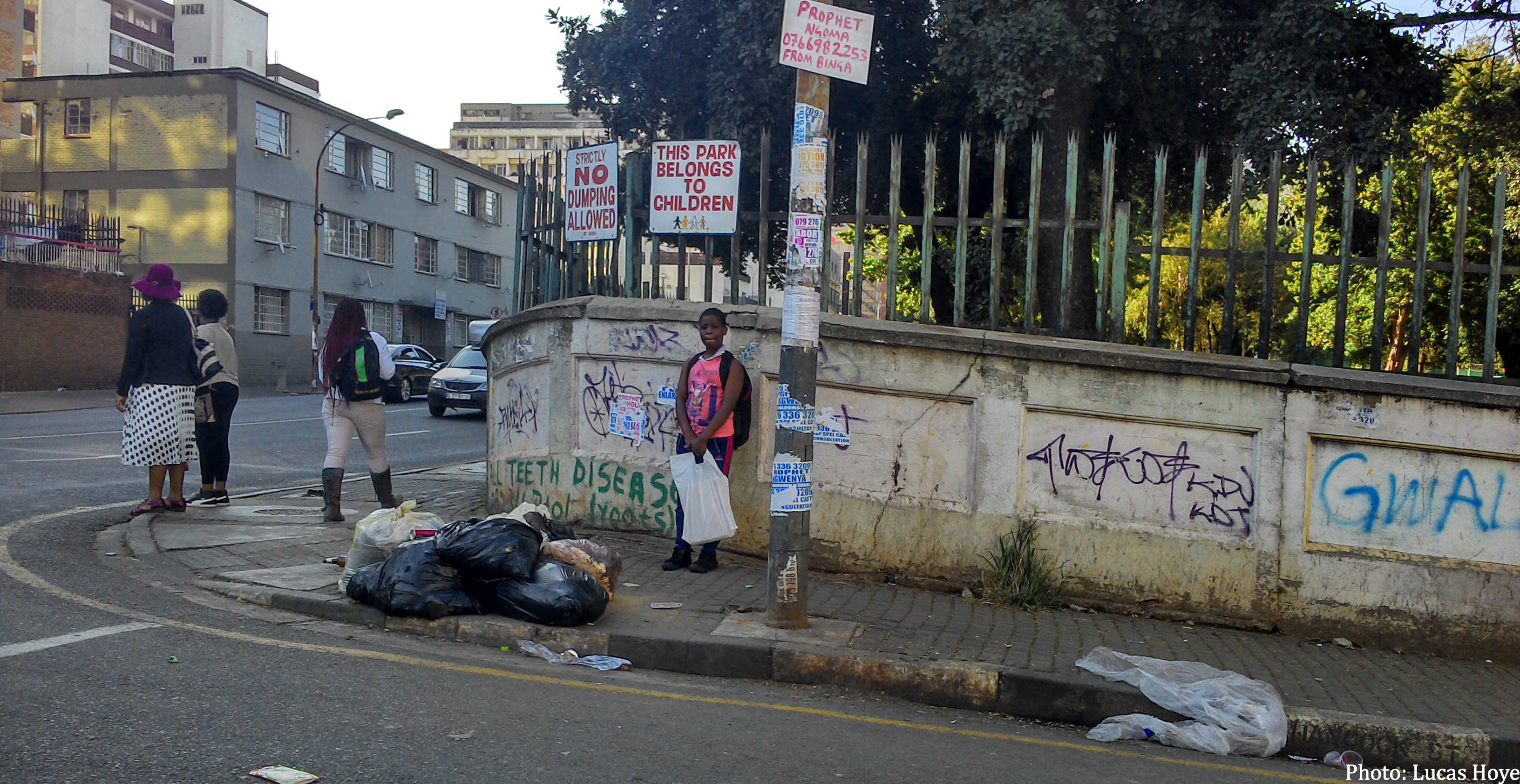
A sudden jolt brought me back to earth as the next video took me into the heart of Johannesburgs central business district. This was the Africa we know from the newsreels, the Africa, unkempt buildings, honking cars, the ubiquitous  combi taxi, twisting and turning its way through the traffic. Lots of people on the street sadly not a white face in sight, no modern architecture, just the gated shop fronts to barricade themselves and their goods from the night-times ‘other world’,  which conducts a parallel business when the sun goes down. Everything was much as I had left it but it looked run down and aimless. The life had gone out of the people as the economy ceased to thrive and a scruffy  street economy grew in its place. The few high rise buildings, famous as Insurance or Banking head offices, thousands of white collar workers keen to get to work and be part of a thriving economy, now either stand empty or are partly occupied by much smaller companies. They symbolise a different era, a monument to a different time when South Africa felt it could take on the world but which has now been reduced to a cottage industry . There is a somewhat malevolent current in the air as disgruntled black people, finding the  promised land of ANC electioneering simply transferring them from the poverty of the township, to blocks of dingy flats ringed around the CBD
The nostalgia of living there and being happy there came flooding back as I watched the first video but reality stung home watching the second as one remembered all the warning signs of the overpowering right of a majority to choose. 
A healthy warning of what popularism can do in its ideological right to do s

Once upon a time


Subject:“Once upon a time”.

The fact that Christianity and Christians who follow the faith seem less and less to believe in those parts of the New Testament, which talk of the miracles which Jesus is reported as having performed, even his 'rising from the dead' is held as a metaphor, whilst, at the same time, he is held in high regard as a teacher of moral values.


The Old Testament is full of allegory and deals much more in the mysticism of God and his creative aspect here on Earth, of mankind being created for a purpose and not just an evolutionary oddity. Being more mystical it can be more enduring since it's claims are built wholly on faith and not rational measurement. The God of the Old Testament is more fire and brimstone than the Heavenly Father the New Testament talks about and the sense of a son of God coming down to save us is missing. The Torah is parable writ large it has no need for history or carbon dating it is 'the word of God' whilst the Christian bible is the word of a man come down to earth explaining that he is the son of god. He is also flesh and blood and lived and died, his claims, not withstanding, are more sociological and deal with us as a species who need guidance.
The Muslim faith like the Christian faith is focused on a man who lived, Mohamed who whilst never claiming to be the son of god claimed to have a connection to god and as his followers attest, speaks for god. His guidance, through the words which god spoke to him is the basis of much Muslim analysis and conjecture as to what god meant but Mohamed's position as the conduit places him on a platform which believers fervently defend as being the one true revelation of god's will. 
Hindustrace their  their own faith back much further in a complex mix of gods who reflect the temperament of mankind in all its forms and in so doing have crafted a web or a structure which covers all forms of human nature, with the Hindu interpretation firmly embedded in a nations devotion. 
The lore of ancient China and the societies which existed in Japan lent greater force to the behaviour of men and women in the society and therefore a culture grew around this kernel of acceptable behaviour and was the hierarchy under which people were graded. The public willingness to be graded and identified in this way was the strength of Confusion continuity and identifies these extremely old centers of civilised human behaviour.  
Buddhismis a philosophical understanding of the frailty of human experience which attempts  to bolster us with the rigour of study and debate. It opens up the question of who we are and why we exist in a sort of Platonic endeavour to delve into the intricacies of our mind and what our mind tells us about ourselves. It places no reward other than better self awareness and through that self knowledge, a better understanding of ourselves and the people around us.  

The curmudgens world


Subject:A curmudgeons world

With the Trump supporters in Washington marching in the streets, the turmoil in Peru, the fighting in Eritrea and Erdogan stirring things up in Cypress by asking for partition of the island and that's to ignore the on going grievances in the Middle East the world this morning wakes up to disharmony. The pandemic far from over is a battle which we all have to win, or at least contain and whilst the church bells are silent each Sunday morning with the churches closed the communities holed up in their homes they only have the television and a diet of Netflix to look forward to.


Dominic Cummings has gone with his critiques even harping about the size of the box he was carrying of his belongings held in No 10. Is there no end to disharmony. "You sow what you reap" is the old adage but with that vehicle of unfiltered comment, the Internet bursting with vitriol, full of hatred, people, lashing out to voice their unhappiness and discontent will there ever be a time when we can just get on with our own lives and not bother with everyone else's. 
Perhaps I am not a good example with my blog giving me access to at least the dozen or so who read it, to voice my opinion. We all have opinions some formed through years of exposure and personal experience, others more flighty, taken by what you saw last night on YouTube often which doesn't drill down on problems giving them context. The dramatic images formed distort reality and with short attention spans, become the focus of many people's rage. 
I suppose at least it gets them out of their comfort zone and loosens the grip on the somnolent nature of a people satisfied, within a welfare society gone wrong, where 'rights' proceed common sense and dulls the realisation that we make our own rights by the actions 'we' take. 
In a world in which our stars are silly presenters who egg on contestants in yet another round of ghoulish shows on how to win fame and fortune as we seem to expect more and more bazaar performances, over the top shrieking and clearly fake enthusiasm. The salaries handed to these clowns is appalling. Earnings which ordinary people, the ones watching the show would take a lifetime to earn are obscene and provide another example of how out of step we are with reality. 
It's this distortion of reality which dismembers the people making up society today, the disconnect between ordinary and a different type of normal, a normal which is manufactured and which sadly we support in our choice of viewing.
Can the word curmudgeonly be applied to me as I find so much to grouse about these days. Is it the perennial epithet applied to someone who hasn't made his million and questions the methods now open to those that have. Is it plain sour grapes evinced by an 80 year old who fears he hasn't too many years left to comment.


Where is the switch


Subject:Where is there switch 

Algorithms already make a mockery of ethical thought as they mathematically seeks to locate our weakness's and probe our probity, to disrupt our sense of enlightenment and feed us a fakery the world has never experienced before.  Anything and everything is up for grabs as technology replaces real for unreal, to the extent we can't tell the difference anymore. Our source of truth is demolished into fragments, images of half truths mixed up with untruths, lies and deceit with wholesale corruption. 
Society is defined by the epoch it lives through. The Mesopotamian period when mankind drew together to farm and share skills, the Greek/Roman epoch when, first philosophy and a sense of responsible society was born in Athens with later the fusion of a collective power through the Romans enabling them to envisage their concept of civilised society stretching far beyond the Italian peninsular. The Renaissance that resurgence of civilisation following those fallow years of the Dark Ages with art and civic pride adorning many cities in Europe right up until the Industrial Revolution when aesthetic beauty was replaced by the focus on manufactured goods and exploitation. 
Today we are experiencing the beginning of a new epoch, the epoch of connectivity and persuasion.  The power of Artificial Intelligence to outreach and perhaps replace human intelligence. It's the epoch of the replacement  of the human as we know ourselves, this mind orientated, fiercely independent animal who has progressed, through evolution, to finally invent its own nemesis. 
The insertion of AI into our relatively pedestrian thought process's will inevitably lead to the question, "do I need the human anymore".
All this in the wink of an evolutionary eye, it's not change built on experience but a manufactured perspective which has no sense of common good or improvement rather its the iteration of solutions which feed in on themselves to find an answer but in so doing lose sight of the question.
Taking ourselves out of the loop because we are too slow and cumbersome has the danger that all the ethical and moral checks and balances with be dumped, in the name of efficiency by an piece of mathematical reasoning.
Mankind risks the fate of being placed in an evolutionary cul-de-sack, like the dinosaurs on a road to extinction. We always kidded ourselves we would have a hand on the switch to power down but with fake news - where is the switch.


Tendering the balance sheet


Subject:Tendering the balance sheet.

Should one measure ones life in economic terms or spiritual ones. Should one count the cost of ones surroundings or measure it in terms of ones coherence with what you see and who you are as a person. Is life a collection of remembrances or of trinkets with little substance other than the price tag.

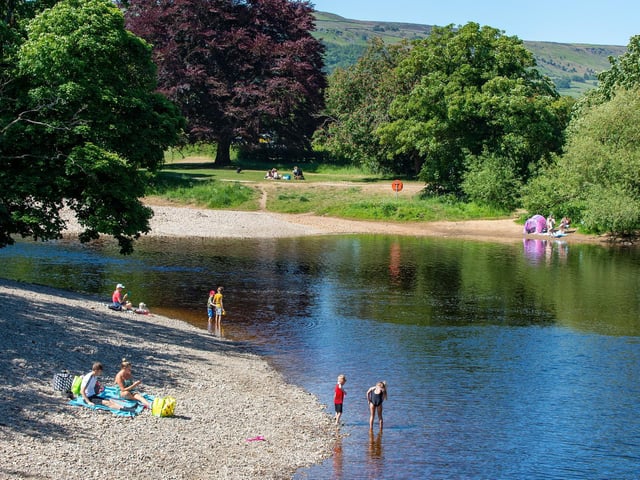
When I was growing up cycling along the River Wharfe towards Ilkley I used to admire the large stone houses and solid walls which housed the well off in this spar town. It was the antithesis of the dark satanic mill towns of which Bradford was one, the houses here were open, a countrified retreat away from the claustrophobic city and I often wondered what it would be like to live in one. Being an apprentice on very modest means it was a dream, like winning the lottery, it was remote from anything I could realistically dream about and like most of us in life I never really planned to fulfill my dreams. We muddle along making changes as we move about, no great plan, no great desire, only a desire to be happy within the surroundings we live in. 
Looking back on a pretty chaotic life I wonder if I didn't sell myself short, at least in the sense of accumulating wealth. There were moments when I was on the right path but only too easily, took a wrong turning and messed it up. Of course these wrong turnings each have their own story, their own pathos, some small tragedy which might have been avoided if my eyes had been better attuned. That's not to say I was unhappy in the course which life took me, certainly not but I was more like flotsam on the surface of a stream rather than a rock in the middle of the current. 
In self belief I was secure. It was a belief without the foundation of an education which I could turn to to assure myself a place in the social milieu or an economic one, I was peering into this other world, much the the cyclist, allowing things to pass me by and sometimes wondering what it would be like but without becoming too obsessed to try.
My political understanding of what life is about and what is important came into conflict with creating the need to cultivate the right circumstance for getting on and I was more inclined to worry about the other 'left behinds' than making a break for the high ground myself.
Today as I recognise that those properties lining the banks of the river Whalfe will now always remain outside my field of accomplishment or the intimate knowledge of what it would be like to live there, I have to settle with the idea that no matter where you live it's the person you become which is important and not the surroundings you buy to announce to others your success.
A cop out maybe but it's the one most of us have to consider when we tender our balance sheet at the end of the exam.