Wednesday, 26 September 2018

Institutionalised brutality


Subject: Institutionalised brutality.
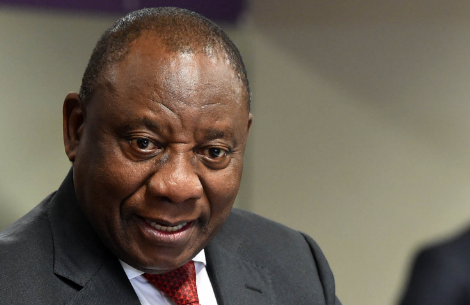


The issue of Cyril Ramaposa's message to the citizens of South Africa that "land can be appropriated without compensation" hits against all kinds of legal precedent, not least the term of contract law which defines the repayment of the Bond (mortgage). Nedbank not known for its political sensitivity has said that the bond repayments must be met as per the contract, irrespective of the fact that the land and its contents have been appropriated and given to others. It's just the sort of mess politicians get into when they play the racist card, in this case, black against white. The argument of reattributing land to people who held the land in the sense of far off tribal occupation and made landless by colonial power and white repressive government is undoubtedly accurate. I'm sure it could be made the case in virtually every country over time.
The distribution of land in this country by the King to the ancestral Lords as repayment for loaning men from a Baronial district to fight the Kings cause was common (no matter that the men who lost their lives in the battle received nothing) and that vast swathes of countryside and city are now owned by a few families.
Compensation never came into it since we had been taught to "know our place" but we are easily incited to feel the injustice if, in another land the agents of a colonial power working often for that power are seen, through the modern lens of a myopic correctness feel that an injury has been done.
How little thought is given to the tribal representatives of this country the bulk who I see standing in the queue at MacDonald's with little or no education and subsequently no hope for the future. Who's life map is planned by their Post Code, just as the boy in Mitchells Plain is earmarked for gangs and drugs.
Our willingness to be coopted into some sort short term sympathetic frenzy is legion whilst all around us lies an equally disdainful, if less acute way of institutionalised brutality.

Amazon rules the world


Subject: Amazon rules the world.

Perhaps it wouldn't be a bad thing for Amazon to rule the world. For all our shopping to be done through them instead of trailing out to the shops. After all its only nostalgia which keeps us returning  to the past and the old way of conducting our affairs.
The shops could close and become residential, only the eatery remaining open and a snug to hide away in to pass the time.

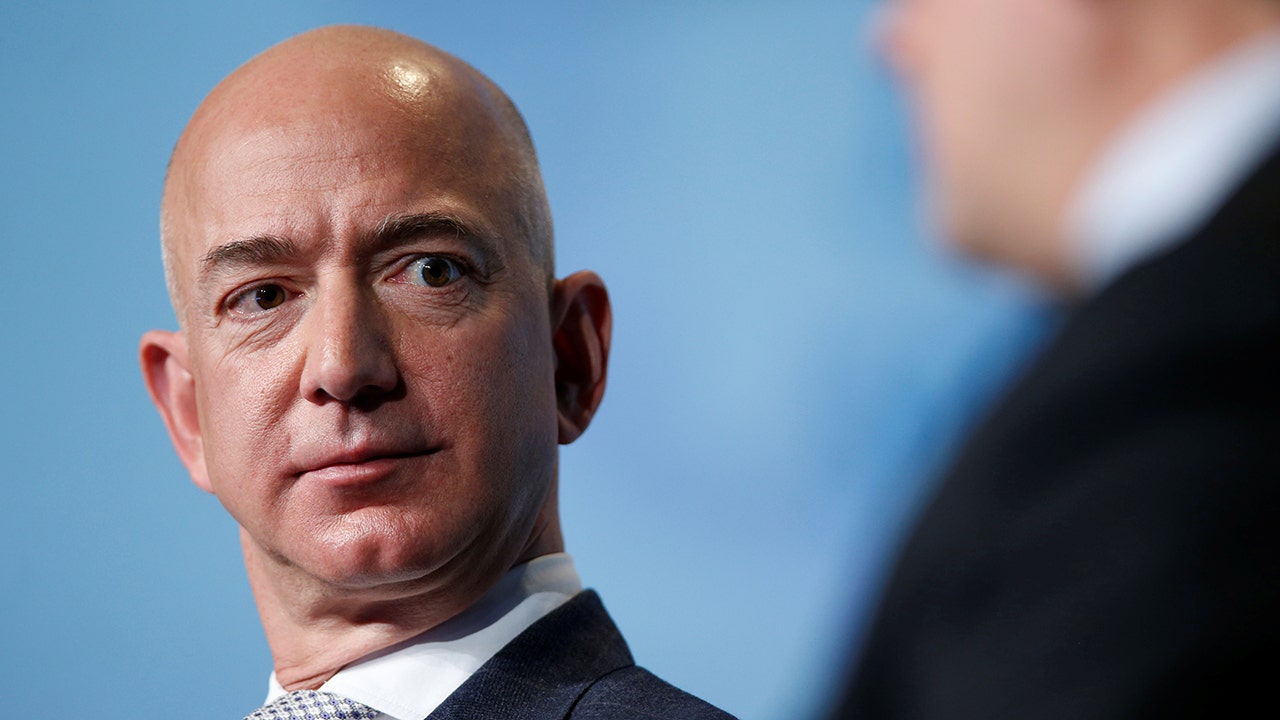
Mr Bezos could soon become the first trillionaire on his way to his first quadrillion, his empire could reinstall a modified version of the "slave trade" as he sought workers in his warehouses to work for free vouchers for Amazon Prime. Ironic perhaps since really there is nothing they could afford to have delivered anyway.
The indolent will benefit by having a reason to stay at home waiting the delivery. The roads will be clearer for the delivery vans to get around as people, not having a reason to go out put their cars up on jacks to avoid road tax. The ones who still have a job which artificial intelligence has not taken over, will be 'on line' anyway interrogating the minority who have to actually get out and do things.
It's the brave new fibre optics enabled world, distance and position mean nothing any more since, in the globalised pot, all being corralled into becoming peon's and only Jeff Bezos is out shopping.

Writing and reading


Subject: Writing and reading.

Like an alcoholic I have just been binging on Amazon, buying books. I have these urges to read up all that a specific author has written. It's as if each book each word and sentence will inject the same joy, the same pleasure as when I read a book by them the first time.


Today it was VJ Naipaul who's book,  'A House for Mr Biswas' captivated me a couple of years ago. His prose style and his quirky characters are brought to life and you live right alongside them from start to finish. My bookshelves are largely full of 'need to know' stuff,  historical philosophy to the present day, attempts to get my head around the sub atomic partials and parallel universes, history books and travelogues, auto biographies and biography mostly political. The realm of novel writing was limited by those I felt I should read, Russian and German authors as well as the best of the English  but my attention was caught by such as VS Naipaul's Mr Biswas,  (just ordered three of his)  Philip Roth (bought them all), Jonathan Rabin (bought all of them) Richard Ford who's book 'Canada' was a great read, and all of John Le Carre who's ability to weave an intricate story is on par with the best.
Books are the rabbit hole experience we all desire as a relief to the crazy world around us. The increasing thought that it's all a con that nothing is true anymore when it gains mainstream interest. The scramble to outdo and embellish the story, to coat it in innuendo and scepticism,  as if we the public need to have a bias presented to us to juice up our own bias.  Where is the truth in a world of tweets which are but passing thoughts without the discomfort of facts. The tweets and the anti tweets, the bile and the anger all the discomfort of modern experience brought to the boil on the internet.
Perhaps having to put a 30p stamp on the envelope contained our worst excesses in the past, today it's too easy and too anonymous, too easy to bring out the worst in people. To shout abuse at the 'bouncer' takes courage, to write and abuse someone from the comfort of your armchair is too easy.

An interview with Linford Christie


Subject: An interview with Linford Christie.


I was watching a program on television a couple of days ago in which the 100m sprinter Linford Christie was being interviewed about his past and, via footage of TV shows shown in the 60s and 70s which had a strong racial bias, his opinion on race issues  today. These early TV shows reflected the opinion of the time towards racial stereotyping, the assumption of white racial supremacy and the comedy built around a "them and us" philosophy which invariably placed the white person in the ascendancy.
A great deal of work has been done in this country to banish this sense of racial prejudice and in a growing multi cultural environment is seen as  vitally important to calm the publics sense of living in a two tier society. 
In one sense it has been done by suppression. The use of  'Political Correctness', an often quite savage embargo of subject matter deemed racially oppressive, with strong deterrents  for people in the workspace if they hold views which were deemed anti PC.
Over time this indoctrination of public perception has meant that people now-a-days instinctively shy away from discussing subjects that could be deemed to flow against the PC tide. Their participation in open debate on critical aspects of racial mixing and the effects which flow from that mixing is seen to legitimise prejudice and therefore must be shut down. People brought up in this era of Political Correctness often have a blind spot when it comes to the reality of issues arising when trying to blend diverse cultures.  It is said that they are blind to the differences and accept unhesitatingly the story of white oppression seen through colonialism and the inevitable guilt the white man must carry for events which happened many generations ago.
Linford Christie in his day was the epitome of the black man as seen through his physical strength and natural physiology. He was was, for a while the fastest man on Earth.  His deep brooding eyes and his piercing gaze as he concentrated on the job in hand the race, were synonymous with that terrifying imagery we remembered as children from the story's of tribal savagery in darkest Africa.  Linford was the man we were not.  His explosive power was saturated in myth, a myth about latent sexual strength, of a physicality with which no white man could compete, with huge muscles virtually bursting through the skin as he swayed and prowled around the starting block.
Today he is a jovial, contented man who, when asked, having seen a clip of a risky 1970s comedy what he felt about it only laughs that it was funny. The programs 'white presenter'  seemed abashed and quite put out by this lack of current day opprobrium on all matters racial, his tinder having failed to ignite a man comfortable in his black skin, comfortable living in this country, comfortable to see the stereotype humour of the 70s for what it was, comedy, could only stutter his own reverse prejudice for which modern society had trained him well.  The healthy enactment through comedy, reflected by the society of the day, a society learning to assimilate the situation in the best way it could, by poking fun through an enlarged humour based characterisation of that prejudice. 
The frigid, ultra sensitive, politically correct individuals represented by the 'presenter' miss the opportunity which used to present itself as working class humour to take the edge off potentially contentious issues by laughing at them, and would rather "insist" it doesn't happen by legal injunction  and punitive punishment.

A political monster


Subject: A political monster.


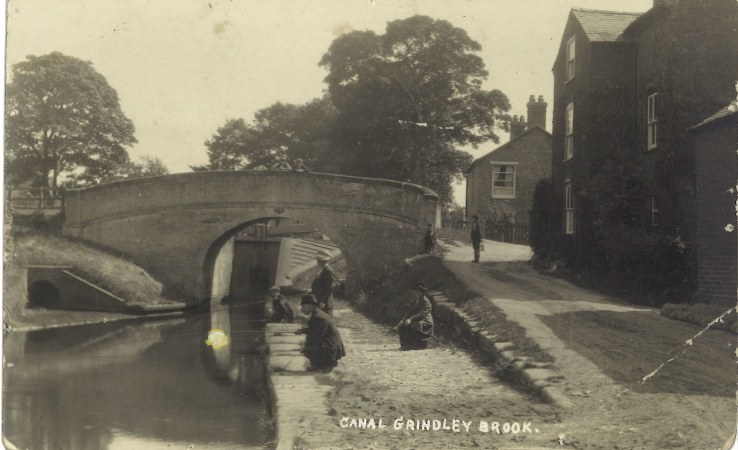
When I was a young boy we used to go fishing in the canal. It was pretty basic stuff a simple rod, a float and small lead weights to take the hook down through the water to where we assumed the fish would feed. The lure was worms which we used to keep in a tin and we would pick up the worms who had tried to escape and pop them back in the tin.
It was all so reminiscent of Brexit, a can of worms which once opened the worms escape Worms we didn't know were there, worms with such healthy vigour we now identify with the corporate body and are at a loss to imagine how the coronet body will function. A Pandora's box of worms which now, out of control we cast around for solutions where probably there none.
To be in, or to be out, that is the question since remarkably there seems no half way. The implications for virtually everyone living on this island mean change and usually not for the better. From simple things like visa requirements when you go on holiday to the assurances we have become used to when purchasing food, all of which is regulated by the EU. Every legal dot and tee has to be reexamined and redrawn. Complicated supply chains which have grown up as part of the manufacturing process will be broken and a reversion to 20th century uneconomic practice, recreated. From the drugs market to the legal authority to fly over and into Europe has to be renegotiated because the status of the parties to the existing framework has changed. In finance the system of providing a seamless trade between the financial centres is brought to a crashing halt with massive implications for our main income earner.
So what seemed as a relatively simple procedure to keep on as before with only a bit more form filling has been shown to be horrendously complex.
The world had moved on and we hadn't noticed. We assumed that the system of multi -national companies and global trade, were allegiance to national priorities was made irrelevant  by corporate boardrooms sitting in tax havens was as it was when we last looked. Parliaments have become largely irrelevant, limited in their power to influence these global juggernaut, even to make them pay tax on the profits on the products they sell within a nation. We have left for years now the nitty gritty of trade negotiation to the EU Commission where it collectively negotiates on behalf of 28 soon to be 27 nations. So bad is our position that we have hired people from New Zealand and Australia to teach us how to do it.
Perhaps when we first looked into sidling up to the trade area in Europe in the 50s and 60s first being humiliated with a rejection from Charles de Gaulle, our wartime ally who had spent the war in the relative safety of London plotting his return to France.
Cap in hand, we pleaded to join this alluring market place, ditching our loyal supporters, the Commonwealth in the process, swopped the paradigm we knew for  a political monster.

After Brexit what will be retained


Subject: After Brexit what will be retained,

One of the effects of Brexit was our desire to escape the clutches of German hegemony in the guise of the EU.
It's useful therefore to read European history, and the rise and fall of the Hapsburg empire with its seat in Austria but influenced by the German states and especially the power of Prussia.


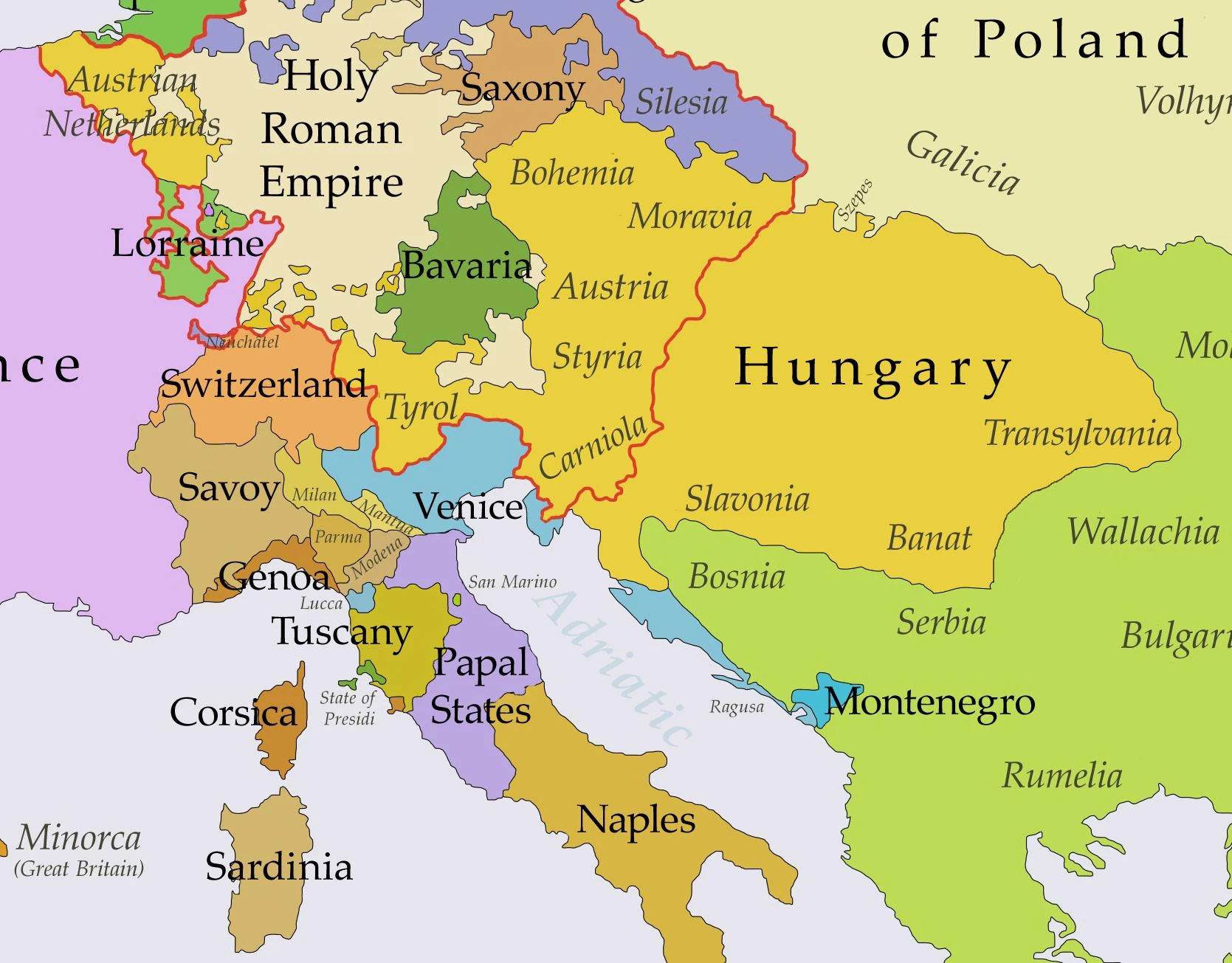
The conquests of Napoleon which tore the continent apart led to the amalgamation of the countries lying to the east under the titular political control of Austria, countries such as Hungry, and Galicia, Transylvania and further south, Croatia. Metternich the German diplomat, the schemer the supreme fixer with his complicated political treaties, tying the threads with a semblance of legal continuity. And Russia prodding the surrounding nations, taking bits here and there through conquest and threat of conquest, a continent in continual flux with dynastic assumptions leveraging the imbalances.
Up until the two world wars these nations were always jockeying for advantage. Boundaries drawn and redrawn, nations one moment subservient to this power, the next under the rule of another. Flux and counter flux with the common denominator, men dying in their thousands and, as the killing machines became more efficient, in their millions.
The Iron and Steel Community, the Free Trade Area, the EEC and now the European Union have been a spectacular success in unifying all these disparate nations supplementing each with a common interest, a common economic union with trade and free movement blurring the nationalistic differences.
Sitting off the continent proper these islands were protected from the pervasive influence of national grievance and were allowed to evolve our own concept of parliamentary democracy. Our expansion was in the Far East, Africa and to a lesser extent the Americas. Trade and exploitation were our modus operandi, mainly driven by private companies it relied on a business structure based on the law of contract and a substructure such as roads and railways to exploit the trade.
As we seek to extricate ourself from our short dalliance with Europe we must understand the fundamental philosophical difference between the way European nations think. Their history of turmoil and confrontation, now reaching this safe harbour of economic and structural tranquility, which the EU represents.
Federalism, the subservience of nationalism is the corollary of a thousand years of conflict which we in Britain never felt the pressure to assuage in the same way.
Our nationalism will lead us into many false dawns but at least, like the child leaving home for the first time there is the excitement as well as the fear of the unknown which once again as we come of age we cast off the sureties of parental conformity with its structured "I know what's best for you" diktat. Our mind has become dull with the conformity, we have forgotten how to function as an independent nation, leaving much of the decision making to the EU Commission and the European Courts. This  has been a safe haven with many benefits. General high quality standards, good labour laws, a set of progressive environmental sign posts which might have been overlooked by our traditional obsession with dumping regulation in search of profit.
It can only be hoped that our brief flirtation with a large family, ( the nations of Europe) which of necessity requires compromise and a wider more consolatory view will be retained.

The savagery of the dispossessed


Subject: The savagery of the dispossessed


The concept of "democratic rights" as proclaimed by the French Revolution was also the prerequisite for the Bolshevik Revolution in Russia. Both were born on the back of terror. The Jacobean terror in Paris matched Lenin's tactic of irradiation by extermination of all opposition to the 'Parties' rule. Ideology over-rode the normal compassion mankind can feel towards its fellow man and millions of people were put to death or shipped off to the gulag, which often amounted to the same thing, without a moments thought. Ideology be it religious or secular has a habit of misunderstanding the means with the end.
In both, the revolt against their individual monarchies replaced one despotism for another, the aim, to release mankind from suffrage was subsumed by the acceptance of the violence needed to change the status quo. Violence begets violence and the freedom to inflict violence become persuasive, the fine balance between freedom and responsibility is broken.
On a less grand scale we see it in society today as the freedom to protest our rights overwhelms our compact with society to understand our responsibility to earn our rights by manifesting behaviour which contributes to the progress we all can make to ensure society is balanced and fair.
Society today is clearly unfair as the spoils of our labour largely contributes to the riches of a few. From this flows all the imbalance in health and opportunity which creates the dissatisfaction so many of us feel. The disproportion fuels this dissatisfaction such that our assumed entitlement buries any sense of cohesion and like a disturbed ants nest we lose coordination.
The revolutions of the past were based on just such as this, dislocation within society and a focus provided by a few silver tongues.
Only the false security of the credit card and the balm of consumerism prevents a kick back to that undemocratic, unequal and immoral concoction, Globalisation. The faceless multilateral organisations and the hedge funds who swop their financial allegiance at the whisper of a better deal, the conglomerate who's boardroom is made up of players with fingers in all the other boardrooms, the dissembling of truth such that the population is unable to make rational decisions. All this leads to the perfect storm where, with little to lose the general public revolt and dismember the artificial norms so carefully built up by an ordered but unequal society for ones based on the savagery of the dispossessed.