Friday, 20 October 2017

The voice of reason


Subject: The voice of reason.

Of course people will say I am biased but have you ever heard such squawking these days when women politicians get their gander up and proclaim their political views.
Women generally have a higher pitched, more penetrating voice than the male. Its something to do with their often shorter stature and and the physical make up of their vocal box in which sound is generated after air from the lungs exits through the throat. Perhaps it's natures way of ensuring they have our attention. The screech of a highly excited female is a powerful weapon, ask any man who has had the misfortune to get on the wrong side of an argument. The sound cuts through any attempt at rational comment, and the male can only resort to a kowtowing retreat when faced with such high pitched vitriol.
We now have a number of female politicians who when in full vocal flight as they usually are, are unstoppable.
Listening to Ruth Davison the Scottish Conservative Party and Nicola Sturgeon leader of the SNP one is struck by their party oratory, unstoppable in sheer, impenetrable single minded moonshine.  The world as they wish to see it, ignoring the world as it is. Half truths and damn lies, all pronounced in a high pitched Scottish accent that brooks no interruption.
Whilst women bemoan their lack of parity, they wilfully ignore the fact that women lead their respective countries in the posts of Prime Minister of England and First Minister of Scotland, which in our system of parliamentary democracy means "their word is final".
Political power is so much more powerful than the power exercised by leaders in industry. Other than the George Soros' of this world, who create and break economies according to whim, political leaders are in all our pockets. The laws they conceive and implement have the power of the Courts and the Police behind them. They are the commander in chief of the armed forces and can use that force according to how they see fit. Their power and prestige far outweighs anything a business or religious leader could cobble together.   
And yet they still complain.
It's a strong man who will try to thwart a woman when she is really angry. Short of physical force which, even under extreme duress, a woman is protected by gender status, the so called weaker sex, they are more vulnerable, they make Machiavelli seem amateurish.
Somehow the power of politically oratory seems to be enhanced when a driven, politically adept woman takes to the stage. Man - the appeaser, the pacifier, is at a distinct disadvantage when faced with a pit bull like Nicola Sturgeon or a Margaret Thatcher.  Sturgeon's precise, clipped domineering tone takes no prisoners. Her contempt for opposition is blatant, her goal is to win at any cost and the thought of an alternative view, is preposterous.
And so we have another example of fake news, propagated by a media which thrives on disquiet. Women today have all the tools at their disposal to rise to the top. They can be just as cut throats in their desire to get there. Their looks and demeanour are cultivated from an early age to give them an advantage. It's an advantage no man would grumble about, the world would be far more dreary without their beauty but their insistence of always crying foul, is beginning to wear a bit thin.

Language and its capacity for intrigue


Subject: Language and its capacity for intrigue.

The concept that the art of translation is nothing other than merely a tool to enunciate another language is interesting. That the translation is a replica of what was meant all those years ago and is therefore somewhat mechanistic.
Language itself is interesting and whilst it is argued that language does not stand on its own, as if it has mystical powers inherent in its form, it has a job to do which is to describe to another person what another person thinks. It along with writing is the method we use to communicate those semi original thoughts and ideas which buzz around our brain as electrical impulses and, in the minds as thoughts which seem to spring from the brains chemistry and chemical synapses. I suppose when a person takes LSD the chemical impact on the brain induces new images which have little or no foundation in reality and the 'trip' is unique to the confusion which the overloaded, over stimulated brain experiences.
Language and the words which make up a language are the foundation of linguistics. A dictionary is the sum of those words with definitions and interpretations of what those words mean. A word with the same spelling can gave a number of meanings. Gay is but one example. The interpretation and the different meaning can be cultural, political or an interpretation during translation from one language to another.
The translator is usually foreign to one or other language they are using. Their culture and experience limits them to a set of interpretations and may in terms of ancient languages miss or lack the ability to translate such and such a word because they have not experience the nuance or the subtle shade of meaning experienced by the civilisation which is under investigation.
Some languages do not have comparable words to translate and to describe word for word what we experience today. In fact in a fast moving changeable world which is so different to the slow fermentation of ideas and cultural practice of the past,one wonders if and what will be the use of translation as we move into an age of Artificial Intelligence with an algorithmic substitute for mature language.
The translator of Tibetan Buddhist script already has the problem of using a strange syntax when describing the thoughts of Buddha. There is amongst the English translation taken from Tibetan a sort of back to front way of expressing something which is off putting when you are trying to understand one of the Buddhist concepts.For example :-
"The relationship of the results occurring based on many causes and conditions is convergence of their non-occurrence when there is no reference to reciprocal relationship" it continues, " from a seed there are sprouts and from birth there is old age and death. With reference to a mountain over there, there is a mountain over here".
To the layman this is confusing and one begins to wonder if the use of language in this case is chosen more to confuse and thereby add a layer of mysticism to what could be a perfectly sensible argument as to what life is meant for and our place in the process.


Sunday, 15 October 2017

The Church Service


Subject: The Church Service.


It being Sunday I was startled on switching on the radio to hear singing, a well known hymn which I could so easily have joined in remembering the verses from my childhood.
The reason I was startled was that my tuning dial (it's an old radio) had shifted a centimetre or two and the program, Hymns of Praise I think it's called, belonged to another world.
The world of football analysis or the world of political commentary were on either side of the dial and somehow "providence" had defined my hour. It's remarkable how such a device as a radio can tap into such a diverse world, each excluding the other as if the other didn't exist.
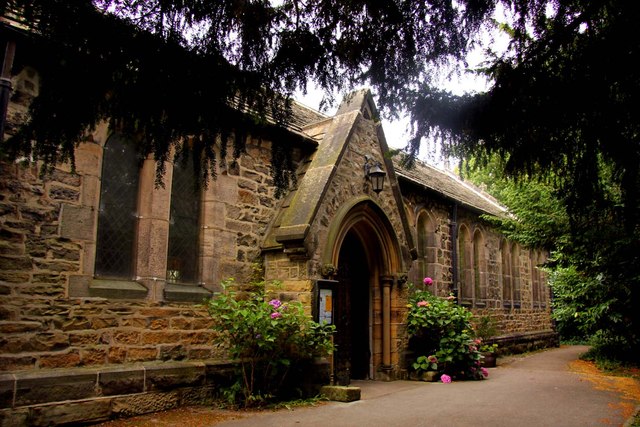
It's a world remote from the Tesco shopping basket or the bleary eyed attempt to remember where you were last night. It's a world of cheery, wide awake believers out and about celebrating God's presence in their lives. It's a community who get it, who have found their personal solution by placing their faith in a power greater than themselves. Their almost tribal conformity comes through the function of familiarity, the hymns are the same the sermon has been around for decades attempting, as it does to reinforce the teaching of the bible, the reedy voice of the vicar, secure in his robes and the dogma of his calling. Let us pray. The reading is taken this week from St John.
St Winifred's will celebrate with snacks and a cup of tea in the vicarage on Thursday evening, everyone is welcome.
The community is conversant with each other and look forward to this weekly get together for a little gossip and the sense that they alone are keeping the flame burning.
It's a world of good intentions and occasional trips to the sea side.  It's a world of camaraderie, an oasis to escape the crazy sectarian world outside with its pornography and lewdity, its bad behaviour and lack of traditional good taste. Meeting Mrs Brown and Iris Sugden even Henry who's wife passed away last year reminds us of how nice it is to have good friends around. The sombre gravestones by the side of the path leading to the church remind us of our mortality, another grave is being dug for someone, I wonder if I know them as part of this congregation.
To congregate is what people do. Old men in the coffee shop, women in the hairdresser young men and women in the pub. As lads we used to gather at the bottom of Ainsbury Avenue to chat and banter, released for an hour or two from the travails of being stuck at home with the parents.
The church congregation is only following a 
pattern, that in uniformity  comes conformity and conformity brings reassurance.  The vicar and the hymn simply remind us of how much we need each other, and in his case, god.

The age of the apologist

Subject: The age of the apologist.


Are we living in an age of apologists. 
Many university trained journalists write articles about the "plight" of refugees. The horror of their homeland, the rigorous journey they had to go through to get to safety and the problems they experience since settling in the West  are told in hushed tones evincing a need to be sympathetic, empathetic. It is argued that perhaps in some way we are, in part, to blame for in our history lies theirs and that they are owed an apology.
Part of the apology is due to a belief in the universality of the world and its people. 
Seen through the prism of 'human rights' everyone is entitled to the same measure of political and social expectation. Everyone is flesh and blood and each individual must hope for the same treatment no matter who or where they are.
In truth that may be what they seek in the West but they seem happy enough to turn a blind eye on reporting what happens in their home, the refugees country and why.
To say there is a war going on and people are fleeing for their lives is not enough. Why is a war going on, who are the people fighting and who are the people these refugees are fleeing from.

Civil wars and religious wars have to be the most barbaric. They pit father against son, uncle against cousin they reveal the most vitriolic hatred, a hatred not usually seen between combatants when nations pit themselves against nation.  
The Syrian conflict, the Libyan conflict, the Israeli versus the Arab, these are not conflicts about mere territory but lie much deeper in the psyche of the people. Disagreements which should have solutions, but given they are ideological, politically and religiously ideological, the root of the conflict runs very deep.
So when we are asked to share our meagre resource and make space is it not also fair to ask why.
These days we are conditioned not to ask why since it is seen as a failure on our part. Not to be understanding, not to be compassionate, just the very thing that "back home" the refugee should be asking its own people.
The mess and the intransigence lies in Syria, Libya, on the Golan Heights. Not in the west.
These conflicts have been smouldering for decades, centuries even. They are an integral part of the region. In the past they smouldered and burst into flame, out of sight and therefore out of mind but with the blessing or otherwise of modern communication we now know what a mess parts of the world continue to live in. Rivalry's that stretch back into antiquity brought to our notice on the television screen, accompanied with the exhortation to remedy what we see with some sort of sanitised western intervention, a remedy of how life should be.
We are induced to feel guilty and then, as a sign of reparation for our guilt we must extend the hand of friendship as if we are family.
Of course the religious family, at least in the Christian sect, seems to view all of mankind as family. The Muslim unfortunately are less empathetic and demand conversion. 
 Should we become embroiled in cultural and religious divides erupting far away on the other side of the globe. 
Should we not wait until the divides are healed by the protagonists. 
Should we, given the apparently unbridgeable gap, not try to step across and pontificate a view which is ours and ours alone.  
Must we be hell bent on 'modifying our own culture', (raised and nurtured after centuries of our own specific conflict), to make a home for these warring cultures. 
Can we not leave well alone and understand that people are different and not universal since the universality of flesh and blood is not what joins us but the habits and the prejudice of our own environment which in turn create the norms we are happy and comfortable with. To destroy all this on some altruistic endeavour seems to me foolhardy and dangerous.

Thursday, 12 October 2017

Much of what we see and hear is tainted


Subject: Much of what we see and hear is tainted.


It's revealing when you are watching one of those respected political programs which appear daily on the television, to hear a deliberate skewing of the truth  from one of the leading political commentators in this case Laura Kuenssberg.
Just prior to the program I had been watching the Chancellor of the Exchequer being grilled by the Treasury Committee. Much of the discussion was taken up by the issue of Brexit and in the complex matters arising. One of his messages to the committee was in answer to a question about pre-planning for the outcome of leaving the EU.  In his answer a gave a range of possibilities.
If there was 'no deal', the pragmatic assumption was that without a specific deal on say aviation, one scenario was that "planes would be grounded", the other, that there would be no "infringement of the current rules regarding flights" and it would be business as usual.
It was clear that he believed that the latter would be the case since the issue of a 'common Interest'  would guide the matter.
Enter Ms Kuenssberg who less than 15 minutes later said on the "Daily Politics" that the Chancellor in his meeting with the treasury Committee had said that without an agreement over Brexit planes would be grounded and not be able to fly into and out of the UK / Europe. The emphasis on the worst case scenario, one which the Chancellor had discounted, was used by, Ms Kuenssberg to spruce up the argument that the "remainders", of who Philip Hammond the Chancellor is one, were trying to scare the electorate into avoiding a hard Brexit and rather accept some sort of continued linkage with Europe. His words were deliberately misconstrued.  I was witness to what he had said and the context he gave to his statement and was not what Kuenssberg was tendering to the public as news.
This gerrymandering of important political statements, of taking out of context the words or leaving the contextual counter statement unreported is extremely troubling.
These political commentators have assumed an importance way beyond their pay grade. They are not the decision makers but with their audience ready to sallow what they say as true the politician has no chance to get a fair hearing.
And so the headline is :- Chancellor is fighting a rearguard action to keep us in the EU.
It's all twisted innuendo mixed with a sprinkling of fact. In a court of law it could be classed as perjury and merit a sentence but in the hurly burly of 'media news' it merges neatly into the spectra of "false news" and we have to live with the fact that much of what we see and hear is tainted. 

India, protecting your prejudice

Subject: India, protecting your prejudice


If indeed we are entering a period in history when 'what is true' and 'what is a false' is indistinguishable and the media, who we rely on to disseminate the news we receive  with some sort of impartiality are complicit,  where is civilisation as we know it to go. The time honoured assumption that what we read, although biased, did address a specific subject which metaphorically lived and breathed was real and, for many, important.
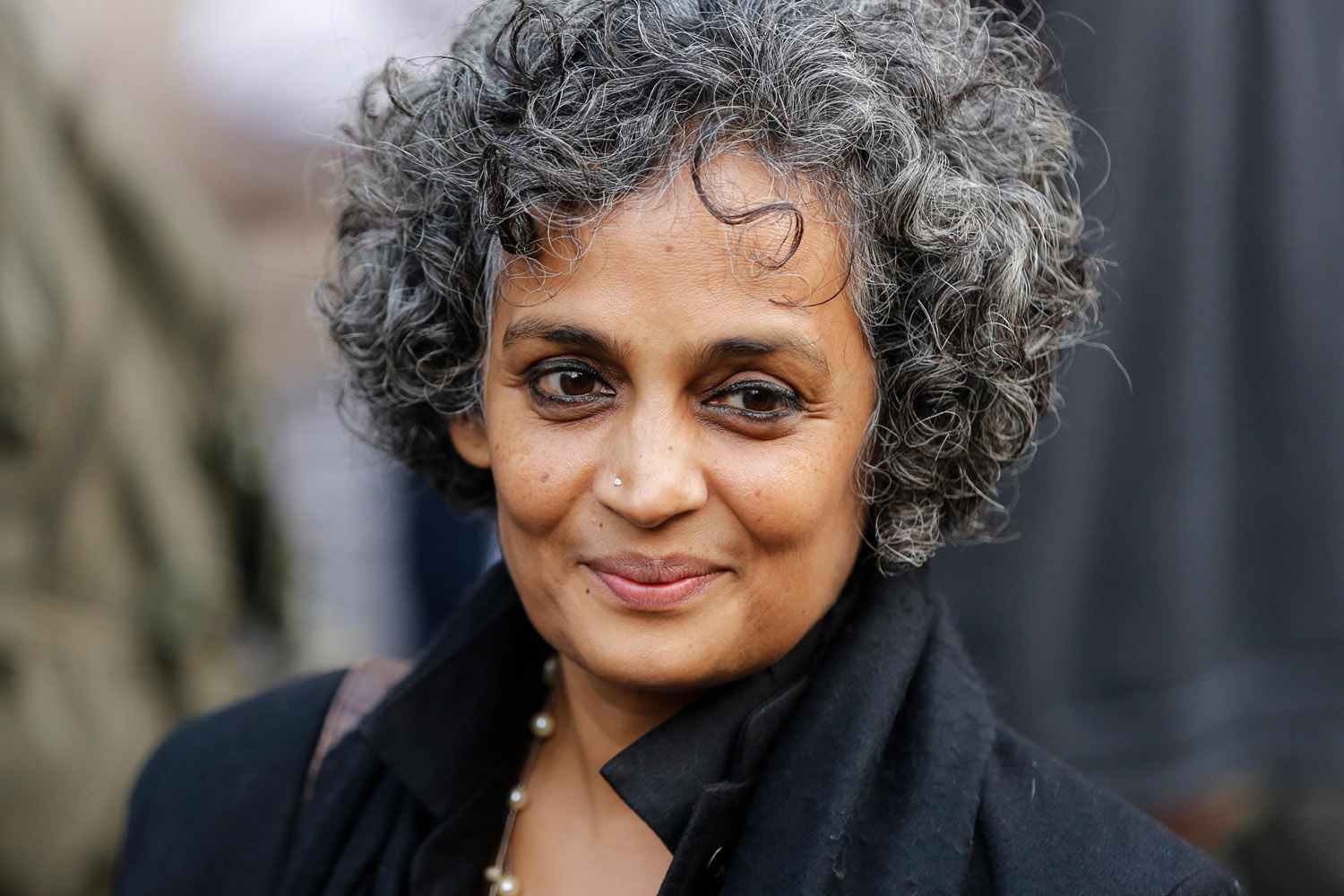
Reading a book by Arundhati Roy in which she describes  in detail the political use of mis-information to stir up an already volatile society, the Hindu and the Moslem populations of India. The BJP with the connivance of Narendra  Modi, the current Prime Minister planted fake evidence of Muslim mobs killing Hindus with the sole aim of seeking to start an uprising of revenge and instability. The political platform of the BJP is heavily slanted towards law and order and therefore, creating 'disorder' suited their plan.
The India we hear about in the Western Press the largest democracy, an India of untapped economic potential, a future force but what we never hear about is the killing and the torture or the brutality meted out by the police. We never hear about the endemic deceit and corruption, the misappropriation of millions of rupees and the need to continually pay a bribe to get things done. A society which is layered like no other, where being obsequious is a prerequisite to keeping your job. Where people from a higher caste have a inbuilt disdain for people from a lower caste and continually laud their superiority over those born to be subservient.  
In fact subservience seems to be embedded in any society which designates what and who people are and, importantly, can be from birth. It fits any society in which  'class' is dominant and whilst subtly hidden within the folds of etiquette and social structure it inhibits growth in this country, just as it does in India.
A horse with its fetlock cut will never race. A man who has to doff his cap and touch his forelock will never be Prime Minister. In this country we designate attainment by school and accent, why else would that buffoon Boris Johnson hold high office and throughout the world nepotism speaks to power.
It's a sad reflection that for all our platitudes about justice, morality, ethics and fairness we still find ourselves hobbled by the family circle you were born into.
But in India it is much worse since the caste system encompasses a whole people and defines the sort of work they are "allowed" to do. It is insidiously cruel since it doesn't value the individual at all and simply stigmatises the person as a group which for the whole of their life they are destined to end as they begins.
Hindus seem to pride themselves as being compassionate and intellectually sound.
When they appear on a television to debate their religious views they seem to offer much less religious 'hype' than say the Muslim, Jew or Christian. Their image is one of benign tolerance, much like the Sikh and one often comes away with a wish that our mix of Christianity, Judaism and now the incessant noise and propaganda of the Muslim would have this tolerance.
And yet laying behind this philosophical justification for an ordered religious life lies the containment of people into caste and worse, that 'outside' even this categorisation system of caste lie people who are not even worthy of that, the Dalits the Untouchables.
How can these calm, serene religious philosophers lose their objectivity by denouncing whole swathes of people to be banished to a life of contempt, of being judged  "untouchable" as if physical contact would would defile your character.
Mankind is truly amazing by the depths it is determined to go to protect its prejudice.

Sunday, 8 October 2017

Canada's Immigration Policy


Subject: Canada's Immigration Policy.


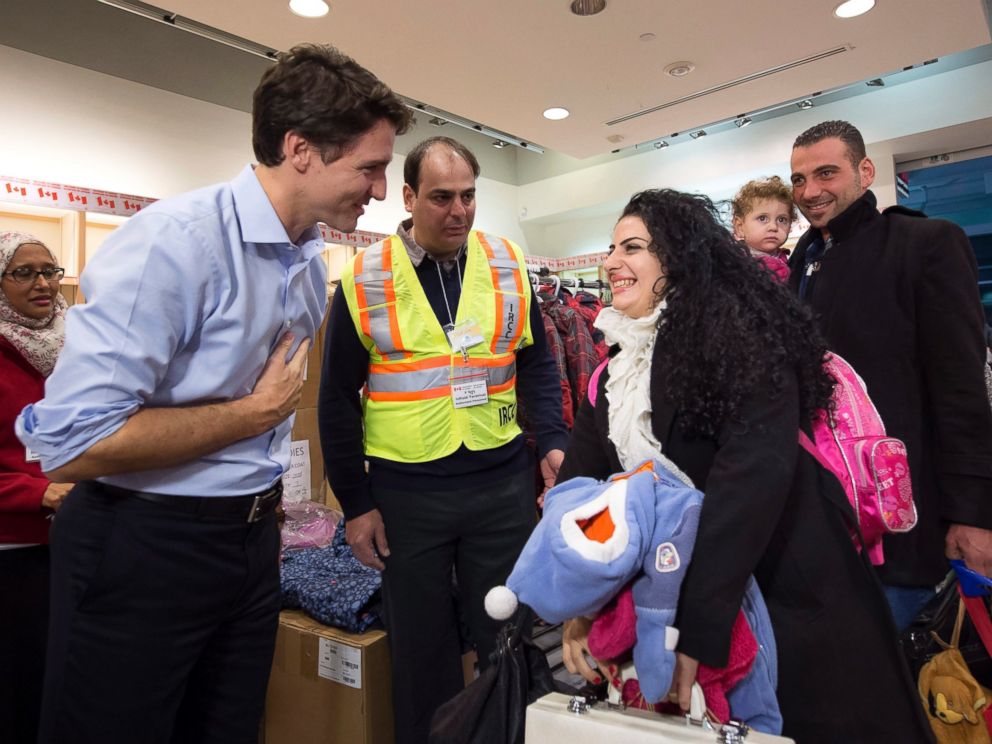
Canada's open immigration policy in which it's Prime Minister goes down to welcome the Syrian refugees with a coat is laudable, or is it ?
Many politicians have played the role of 'glad handing' even when through gritted teeth they have little in common with the person they are greeting.  Its this "little in common" aspect of policy I would like to address.
The article I was reading was written by a well meaning liberal, who's views we have in the past respected for the  influence they have on us in dampening our disquiet.
But what is this disquiet and where does it come from.
The adage that "we don't handle change well" covers most of the things we do in life. From buying a new house to a new wife, there are things we overlooked and didn't see in the small print. And so it is with immigration and the immigrant.
The immigrant comes with the promise of new blood and a rejuvenated sense of the work ethic. They bring a new cultural divergence which is supposed to invigorate our old and tired way of thinking. They bring food and a different perspective to our lives which is often in need of a proverbial kick up the bum.
But in and amongst all of this they also bring things we disagree with.  Modes of thinking and intolerance which we find disdainful and above all, they often bring segregation.
For centuries the immigrant has withdrawn into a self created ghetto. The Jews, the British, French and Portuguese all have felt themselves different, better than the local population. Integration is a rare bird and is soon shot down by bigotry.
If we look at the confusion in this country where accents are no indicator of deeply held differences of opinion, where resentment of the old towards the new and now, the new towards the old is becoming endemic. Where on a clear day you would be forgiven for questioning which country you lived in surrounded by fashions and customs which are alien to your own.
The British are known for being taciturn when challenged to illicit their feelings. Other than in the security of their pub, or at home with friends they waltz around issues for fear of upsetting the guest but when the guest becomes the predominant topic then their default position is to say little and hope for better times.
The cause  if ever there was such a thing has survived the constant battering from the liberal consensus, that there should be no identifying image of what can be called the national image, other than the liberal PC vision of multiculturalism. An amalgam of cultural diversity, which is an oxymoron since diversity is the opposite of uniformity.
If there was one thing to specify, when drawing up a social program for material well being I would have thought that the 'uniformity of intention', not 'the process' of getting there, had to be questioned.  The substantive agreement on what our values are, is fundamental to having any sort of success with visitors who stay. 
Unfortunately only the process was important back in 1947 when, because of the unity the collaborative effect of shouldering arms in a common cause to defeat an enemy did we feel obliged to open our doors to replenish the manpower we had lost on the battlefield. The 'process' not the 'consequences' was all important since our system of governance has always assumed, they know best and the buggers who are at the coal face better get used to it.
Generations have come and gone and although we have muddled through in true British fashion, the massive cultural adaptation of the white indigenous population has never been acknowledged. 
The assumption that new meant better was repeatedly sold and is still being sold, even though there is a wide divergence, particularly a religious divergence, which on the one side, does not feature in their lives but in the other is fundamental to their everyday existence. The absorption, in a largely sectarian majority, of a fundamentalist religious way of life was bound to bring comparisons and with it, "a them and us scenario". The very opposite you assume you would wish to happen if your dream is a inter-supportive multicultural and harmonious society.
My views would be an anathema to the the trendy intellectualisers who promote what we are supposed to think but of course, 'open discourse' has been shut down in the Orwellian world we live in. The keepers of our thoughts and practices would think it unwise for random observations being allowed to gain too much traction. 
Orwell had it down to a T in his books where a minority controlled 'thought police' programmed the thoughts of the many and free speech was ok, so long so you said the right thing. 
In the last 60 years we have become conditioned to so many things. 
The "bad" of our forefathers in contrast to the good of virtually everyone else. 
Whilst 'everyone else' has had a reason for being the bad guy, only the colonial powers were to blame because 'they should have known better'. 
Globalisation is good for us because it encourages to look outside our self interests and encourages us to philanthropise our resource irrespective of what we have to give.
Listening to that doyen of the global picture, George Soros was like listening to the most immoral person on the planet. His rational for causing so much national bankruptcy  after he had placed his bet was that he had to exploit a weakness irrespective of the hardship he caused to individual people living in the countries he had ruined. His saving grace, in his mind was the charitable work he has done targeting his pet projects.
Wall Street has created this Global financial playing field in which the likes of Soros and Blankfine exploit for their own personal enrichment every day.  Exploit the livelihoods of millions of people like you and I whilst we are continually encouraged to thank our lucky stars that a man like Jeremy Corbyn will never be able to promote his ideas since they run counter to the capitalistic mind-speak of the Global plan.
People will continue to swallow the tripe of a band of extortionists as long as we continue to believe "they know best".