Saturday, 15 July 2017

Everyone is right

Subject: Everyone is right.


Why is it white people contrive a world which is what they wish it to be and not what it is. Why do white people intellectualise, fictionalised perhaps even a fantasise on the basis of something they desire to be true, ignoring the experience of people who's actual experience, day to day, is what it is.
Is it one of having been largely in control of history or at least the events of history on the world stage for the last thousand years, that it's an administrative habit to believe they are right and therefore instinctively understand the reasons for non white people not understanding.
Watching a program in which the recent case of middle eastern parents who were told by an adoption agency that their wish to adopt a white child would not be in the interests of the child and that a child from an ethnic background, closer to their own would be more desirable.
This has been echoing around the media and the upsetting 'those who know better'.
How could we they reasoned, in the 21st century living on this tiny island in the midst of this multi cultural, multi ethnic experiment, be so crass as not to understand that racism is a thing of the past.
The wish list of 'best intentions' was questioned by the very people who are most likely to know, the black and mixed ethnicity people, who told their story of reaching a stage in their lives where they had to discover their ethnic clan and to establish that side of what they thought missing whilst growing up. Two members who appeared as representative experts, both black people emphasised the importance their ethnicity meant to them but the one academic who was white and said it was of no importance and that we were now living in a totally pluralistic society where the colour of your skin and the implied hegemony of the group bore no relevance. He became quite shrill and exasperated when both the non white people disagreed with him and it was left to another white person to sit on the fence and say 'everyone' was right.

The prodigal returns


Subject: The prodigal returns.

The prodigal returns.
There's always a flurry of activity when someone comes to visit. The vacuum cleaner comes out as does the duster and polish, the kitchen is given the once over and the bath treated to an extra clean. It's not that I live in a pigsty only that as the sole occupant, there's always 'tomorrow'.
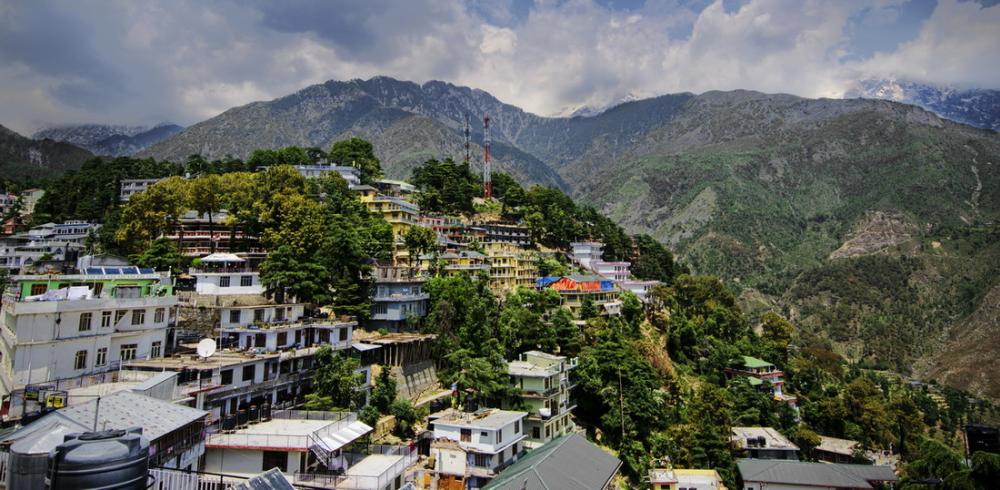
Andrews flight from Dharamsala to Delhi and then an overnight stay in a posh hotel was the start of shaking off the bustle of India for the tranquillity of Bishop's Stortford.
The culture shock is pretty severe. From a Himalayan town bustling with pipping traffic, crawling along between the pedestrians and sacred  cows, the Buddhists imbibed in the business of Buddhism to the teaming city of Delhi with its contrasts made even more extreme by a system of caste. In contrast to the long long haul to Australia, India can be deemed local, only eight hours away, racing the clock back as you fly east to west.
Into a very different world this bearded son of mine, looking more like the son of the Taliban was pulled to one side in Heathrow by the nervous security. Where have you come from and why. Where are you going and why. Serious stuff if you don't treat the matter seriously but after being body searched for an explosive vest, or a bomb making kit in his luggage, all it revealed were some Buddhist prayer flags and a Tibetan mug with a lid for Dad.
Timing near perfect, (the clock is always ticking at the airport if you come by car), I wonder if they won't find some way to charge you for the air you breath whilst waiting for passengers on hallowed ground.
The first sight of the ambling figure, the hug, "how was the flight" and we were in the car  leaving for home. The traffic such as it was is quiet, no irritating horn to plough your way through the crowd, only the civilising respect for driving convention, "no sir after you".
How green it looks, how high the trees have grown, gosh you can hardly see the school.
My efforts at cooking a good meatless meal was rewarded with a compliment and the homecoming was complete with a hot bath and a familiar bed.

There is no money tree

Subject: "There is no money tree"

"There is no money tree". 
We are all too often reminded of this when the cost of the NHS is displayed to show us just how much "we" as individuals cost, when for instance Pensions or Care for the Elderly are highlighted as being the main items of expenditure. It's as if these costs are somehow a drag on the country, that we would be better off without them, the drawers of a pension, the consumers of medicine and the constant repairs they need. Think how prosperous we all would be if we only concentrated, in a Thacheresque way, on the successful young healthily upwardly mobile.
Britain has been in decline for over 100 years. Having played a principle part in two world wars, enormously  costly both in human and financial capital we have never recovered. Unlike Germany who suffered greater deprivation and loss than we did we never grasped the nettle of the need to rebuild the stock which had been destroyed. We never understood the need to put away for a rainy day, we were profligate, led by less than wise leaders who placed their own needs before the nation.
There is no money tree, quite right. We have been living beyond our means for generations and we are all culpable. We have created a society which demands "rights" individual rights, as if these rights were ordained by some higher power when in fact if there was a "higher power" I am pretty sure some of these 'so called rights' would be questioned. 
The right to have Botox or Viagra on the NHS, the right to Abort a baby on demand, the right to express your minority right over and above the rights of a majority, the right to express the most hurtful hatred verbally knowing that the law protects you from the consequences, the rights of women over men in custody battles, the rights of institutions over individuals and of politics over common sense.
"There is no money tree". But the nation is to fund a high speed rail link estimated at a final price of over 100 billion pounds with little justification other than a 15 minute saving for the mainly business class on their trip into London.
"There is no money tree" But we will build a nuclear power plant outrageously overpriced for which we guarantee the foreign consortium, the Chinese and the French triple what we pay for a unit of electricity at this moment today.
"There is no money tree" But we will build another runway at Heathrow ignoring the misery the extra flights will bring to the heavily urbanised surroundings when Gatwick, with a super high speed link into the centre of London, or the not so silly Boris Island, East of London which could be the new , a modern, as large as you like airport, built from scratch.
"There is no money tree" But we will spend billions on a nuclear submarine to ensure our image of still being relevant in a world dominated by 'super powers' with nuclear arsenals which dwarf our puny attempt to stay relevant.
No there is no money tree but when we want to, we still find the money as if there were.

A leap of faith

Subject: A leap of faith.


How normal is the phrase "love thy neighbour as thy love thyself". 
Can it, other than in the most limited circumstance be true that we have to be, not only sympathetic but actively cooperative when fellow human beings need our help.
The plight of the "boat people" loaded into inflatable life rafts in Libya and towed to a position just outside the 12 miles territorial limit and left to drift, taunting international opinion to pick up and save these people or let them drift and perish.
In the case of our own poor who receive a plethora of aid and benefits. They are now complaining that with the new Universal Credit they are having to wait over six weeks with no money coming in. These are people who have come to expect the support that society offers, without which they will go hungry and one supposes could eventually die.


 "The Poor House" was an institution over 100 years ago which was so feared by poor people that they would do anything to avoid being forced into this last resort since it was a manifestation of total failure, a social pit out of which it was near impossible to climb.
Today we have no such Sword of Damocles hanging over us at least in this country. Social awareness has changed the outlook of people who now believe that there is a minimum standard by which we living within a civilised society can expect. This has become inculcated into the national psychic and a dependency culture has grown to include all those who see themselves as deprived of what others might have. 
The American dream where everyone prepared to work hard could make their way and prosper was based on people having reasonably well paid jobs to go to. Industry and mass production, factories and assembly plants meant that work was available and even in this country the wool and cotton mills as well as the motor manufacturing workshops were the bedrock of our society, where with proper control we could encourage the dream of getting on financially and stimulate that most important aspect, self respect.
With work now fragmented so has our ability to see ourselves in the other persons shoes. Everyman or woman for themselves has meant that we are less caring. Why should I worry about some African tossed about in a boat, nearer death than life. Why should I bother if people are laid off work or become unemployable because of their poor education. Why should I continue to show compassion for the survivors of the fire in the flats if they don't avail themselves of what ever is offered, since no one ever gave me a handout.
And so we see these dramas on the world stage working themselves through. We see them as footage on a news bulletin and listen to their protestations of need and we start to slowly turn away, there are just too many claims on our pocket and on our emotions.
Do people have rights. If I were born to a mother in Somalia, if I was born a girl in China, if I were born with any kind of deformity in a poor nation, would my "rights" be heard or have any relevance.
It's so hard to maintain ones positivity in these matters since the concept of being truly poor is hopefully theoretical and as with anything which requires one to take on other people's burdens which are not first hand your own, it requires a leap of faith.

Better next time

Subject: Better next time.


I have been troubled listening to the survivors of the terrible catastrophe at Grenfell Tower lay out their demands to be rehoused and recompensed for their loss. Coming from an era when you accepted your lot in life and gained strength in not asking, I find the "rights issue" which seems to predominate people's lives these days difficult to come to terms with.

Housed in good hotels, whilst proper accommodation is found, seems to be a reasonable solution but the stumbling block is that what is on offer is not permanent. The problem as they see it, is the fact that the accommodation offered, after they move out of the hotel, is itself temporary with no official statement that their final occupancy will be close to the schools their children go to or the housing of a quality which they deem a fair replacement. 
My immediate reaction it that you accept what is offered and only when the blame for the fire can be determined can you expect damages to be paid which go toward rehousing.
One of the things I overlook when I listen to their stories is the dreadful damage done to their mental stability. The fire was not just an individual catastrophe but a collective nightmare which is made more horrible by the constant telling of the loss. The fire spread so quickly with such ferocity that lives were going up in smoke right in front of the survivors eyes.
People they knew, relatives, it seemed the sort of place where the poor gathered by word of mouth, sharing rooms, some illegal but tied by ethnicity and having little choice.
Looking at the war torn survivors stumble out of the last ISIS stronghold clutching their few belongings, wild-eyed, shell shocked children clutching at their mothers skirts, wondering into which hell hole they were being led now. These are the same Middle Eastern bloodline as those who staggered out of Grenfell Tower. People cursed to understand and withstand disaster, people who assume that life is unfair stacked against them but the women at least never the less continue to have babies, create families, and make the most of 'motherhood', having ones own children, watching in their children's eyes the hope that it will be better next time around.

I fear and envy their faith


Subject: I fear and envy their faith.


I am always struck when I watch interviews with young sports men and women who are on top of their game and talk of their future, that life can be both optimistic and cruel. The optimism of youth, with the fitness and good health that normally accompanies being young, the blind faith in some sort of continuum into the future, the suggestion that their future is a given.
Looking back one remembers those days when anything and everything was possible.
Unfortunately the track record for most people is littered with disappointment peppered with the occasional success, even the stars hide their failures.
"A day to childhood seems a year and years like passing ages". Those  long summer holidays, out of school, let loose in the fields and woods to play and explore were idyllic.
The day stretched out until the evening when we would return home with a scratch or two, a bruise, a limp, but undaunted like heroes returning from the battlefield our parents were fended off with stories fit for adults and their concerns but only vaguely close to the action. Only the day I came in with an arrow sticking out of my head did reality come a little closer as I was rushed off to the nearest hospital to have it pulled out
The travails of life have not blurred the young man's  confidence, the knocks that man is heir to are in the future, lurking in the undergrowth ready just to pop up when you thought you had everything covered. The slights of unrequited love the surety of purpose, not your own purpose but the purpose of others, the devil which was in the detail, when you didn't do detail.
The bumps of injury and illness never factored in your plan, you were imperious to such failings.  The heart beat was strong and the other internal organs hadn't born the brunt of your lifestyle yet.
Clear eyed these athletes exude confidence. Their lust for life is palpable, infectious and for one who has travelled the road, already strangely imbued with the pathos of a black comedy, I both fear and envy their faith.

Labelling our ignorance


Subject: Labelling our ignorance.


We are all part of a pyramid of reductionism. In our effort to understand we generalise about everything, the nitty gritty is too complicated and more to the point the more information we have the further away from our prejudiced views we become. Our wholesale collective stereotyping of people, cultures, habits, failures and strengths would dissolve if we took the trouble to properly analyse the ingredients which describe a collective. "No two people are alike" we say and yet we describe whole nations with an epithet that can be unpleasant and down right misleading. The French are this the Germans are that. African people are poles apart from the Chinese. South Americans are as chalk from cheese when compared to the people who call themselves North Americans. And yet amongst all this collective labelling we miss the simple fact that a person, where ever they are born, no matter which culture they have, each one of them has the same or similar sets of basic needs. Food, shelter and security, love and affection, respect and attention as human beings. Each individual firing a gun at the enemy is a husband a father a lover or a son, shorn of their uniform they are the same flesh and blood, yet we label whole nations with praise or ridicule depending how the image of that nation is fed to us by the media. Even historians write with bias it's as if the singular, the person who makes up the calculus of the nation are all the same and yet we know that is not true. Even the word characteristic is maligned since what we call the 'character' of a person, which is in part formed by the way he or she is informed when growing up in a country, this influence over the citizen never the less has within the national influence a sub set of 'family' and a further subset of individual personality.
No nation can be described by its citizens, the rainbow is too varied, too rich and we should all take time to modify our phobia for labelling, as if the label was anything more than a recognition of our own ignorance.