Friday, 12 August 2016

10 minutes in Mackay, our time


All life is a journey. Every minute, every hour, every day.
My alarm goes at 5am and I listen to the BBC World Service for half an hour to see what's been happening whilst I'v been asleep.
Then the "Face Time" jingle rings to tell me it's an incoming call from the antipodes, it's far too early for family to ring from here, it must be Andrew.

The screen floods with sunlight, a cloudless blue sky, wide streets, little traffic and the tropical palm tree confirms its not a call from the UK.  "Morning", although clearly not morning over there, it just adds confusion to juggle with the time difference so "morning" will do the trick.
Andrew is driving between jobs and ever keen to show off his surroundings and share a minute or two, with the marvels' of modern communication, your there, inside the car turning left and right down the wide boulevards that substitute for our narrow twisty roads. Missed that turning, no problem do a U turn in the mid afternoon traffic, (wait a minute "what traffic") and turn around, it's all so relaxed.
After not more than 15 minutes he is back on again, job done and he's off home to pick up some 'take a way' and with his partner in tow, it's off down to the beach, there's a shower of meteorites expected tonight and where better to watch than on the beach.
Events are happening across the globe as I write. Good events, bad events each driven by circumstance, each a product of the environment each pre-determined.
In the cocoon in which we live we convince ourselves that we have some control, that we determine the course of events but in effect we are merely  players scripted by forces outside our control and other than minor adjustments to the ships heading our course was laid when we were born and depended on luck.
We are creatures of the society and the norms we were born into. Perhaps through travel and emigration to a distant country we can absorb different norms and develop an antenna which recognises those values into we were born as well as assimilating the new values. Two setts of yardsticks is no bad thing since, if for no other reason it teaches you that there is more than one way evaluate not only our own actions but also more importantly the people around you.


The world is our oyster.


There are strong moves, and getting stronger for there to be a rethink on the Referendum vote to come out of Europe. The political elite as well as the financial elite were stunned by the results of the vote and have been working overtime to consider ways to overturn the decision to leave.
Part of the problem has been, having won the vote the main "leave" contestants were immediately drawn into government and given the job of negotiating our way out of the network of labyrinth and torturous agreements on trade and the reciprocal laws which govern us. 
Grasping the nettle of unlocking the grip Europe has on us is the task given to Liam Fox and David Davis both ardent "leave" campaigners but behind the scenes is the rumbling of discontent from the "stay" group in parliament and a whole host of people in the business world.
1. The first argument to raise its head is that Parliament needs to 'ratify' the vote because it raises constitutional issues that only Parliament can resolve.
2. The second issue is that the people were fed only sound bites of what the ramifications would be financially if we came out.
The constitutional argument is complex given the place parliament takes in our democracy, especially not having a Constitution or a set of constitutional touch stones to guide us. We rely on Parliament on all matters, even our case law on which we build up our law defining the legal decisions in our courts to be binding and each decision a stone in the wall of our legal precedent. Most countries draft their laws from the top down with legal opinion from the senior judges forming the law which then has to be instructed through the courts. It is argued that our system is more "organic" in that precedence is given to what actually happens in society rather than a concept of what 'should happen', handed down from a class of people who are remote from the society they are supposed to serve.
The second complaint and crucial in the minds of those who wish to stay in is that not enough emphasis was placed on the actual dangers and the actual effects which would arise if we left the European Union, particularly the effect on finance and commerce.
George Osborn (where did he go) was clear in his overall warning that there would be dire consequences but he didn't provide the detail. He like so many of his political ilk had lost the trust of the people, his utterances were taken with the proverbial pinch of salt. 
One man who could have spelt it out and wasn't allowed to was Mark Carney the Governor of the Bank of England. Constitutionally he wasn't t allowed to take sides. 
In fact Jacob Rees-Mogg the conservative parliamentarian and member of the "leave" campaign has been pursuing Mark Carney in the Finance Committee for what he feels were comments made during the run up to the referendum which placed the Governor, alongside the Chancellor George Osborn, suggesting doom and gloom for the economy if we came out.
One of the problems of a democratic mandate is that democracy is not a science but an aspiration and being such, the words used to describe an end are arbitrary. They do not have to conform to any specific definition certainly not a legal definition and the public have grown sceptical of their political masters when it comes to speaking "truth".
The "Governor of the Bank of England" who has the specific responsibility to speak the truth as far as the evidence before him, can not, because of "protocol". 
Who said our world isn't mad.
I have become a firm favourite of Yanis Varoufakis the ex Greek Minister of Finance. His two books "The Global Minotaur" and his second "And the Weak suffer what they must" are both excellent appraisals of the financial machine and the politics behind it. 
The first book covers the American re-financialisation of American spheres of interest  and the creation of a dollar zone in Japan (covering Asia), and Europe to recycle the dollar imbalances as America pumped money and resources into her prodigies Germany and Japan. Both countries under her control with a sitting occupational army and both  destined to be the nucleus of the rebirth of each area after the war.
The second book covers Europe and the intrigue that went into and still makes up Project Europe.  Varoufakis saw at first hand the relentless power of the Bundesbank in his negotiations as Greek Finance Minister trying to find a way of relieving the oppressive debt incurred by his nation, trapped in the clutches of the Eurozone.
Both books informed and influenced me in my decision to forgo the warmth of the European embrace (specifically the German embrace) and the tricks of the deviously powerful bureaucratic Commission, Jean Claude Junker and his pal's. 
A cabal of influence which is undemocratic and only serves its own ends.
Given that we survived in the past as an independent nation, effectively trading with the other nations of the world before the EU was conceived, there seems no reason we can't do it again. We need to get up off or collective arse and stop reflecting on what might have been and consider our strengths as a nation which are many. If we can drag ourselves into the 21st century and leave the traditional humbug behind, including our crippling obsession with the preservation of class and elitism "the world is our oyster".


Reading and writing (never mind the arithmetic)


It's strange that as one gets older, one puts so much effort into reading to gain even a little information, information to make one conversant with a situation so you can understand it better. 
 When you are young learning is a natural progression, even a prerogative of a young mind eager to grasp and make sense of what he sees around him. The knowledge equips him/her with an ability to fit the pieces of the jigsaw, together and understanding how they are interconnected, to understanding the significance of each of the parts.
In business or pleasure to know things allows you to interact, interject, become a player.
At the other end of the scale, as ones life begins to close the need to understand should become less important, certainly as a tool for self enhancement. And yet the need to read and learn becomes 'greater' not less.
Reading of course is a sedentary occupation and most suited to the old, who's arthritic joints take a way the pleasure of a walk. The journey outside becomes a torment and deadens any sense of enjoyment. Sightseeing, even the effort to get to an area where the views are spectacular is something which, undertaken when young was all part of the anticipatory fun. Part of being alive and feeling connected with everything around.
When the joints ache and the breathing comes laboured with a funny whistle as the air seeks a journey through the narrowing spaces.
Is it any wonder we turn to, some would say first, some would say the second best transportation platform known to mankind, (other than the  "transporter" in Star Trek), a well written book.
Turn the pages and your off into someone else's world, visiting places someone else has visited, sampling the pleasures bestowed on someone else. This third party arrange-meant could and is viewed by the energetic, none arthritic amongst you, as being second best but I would argue firstly, beggars can't be choosers and anyway even the most athletic and vigorous amongst you are hardly likely to want to trek across the Gobi Desert or stand by the side of Ellen MaCathy as the wind shrieks through the rigging and the deck bucks and plunges in the South Atlantic.
The political discourse, the Religious surety the philosophical probing are all there between the covers of the binding, secure and ever helpful, like a good friend. 
But why I ask is all this probing, this needing to know, this matching of dates to seek the relevance of the time and the perceptions of that time period, why is it important when soon you will be no more (sans wine sans singer sans end).
 The brain like a sponge is saturated with facts and figures and yet you want to cram in more.  Of course its a habit of a lifetime, a relaxation, it's an escape from the boredom of not being active, of not turning heads as you flashed past the proverbial winning post. Having become a sad mixture, of being transparent, people don't see you as being memorable and opaque in that if you had shape, you don't resemble anything of value.
Reading reverses all that, it puts you in the driving seat, in charge or the gears and the steering in so far as you can close the one book for another. You scramble a while for context and then you are away disappearing down Alice's rabbit hole to who knows where, a magic carpet ride through the Aladdins cave, a brush with something you remember from the past which makes you reel with nostalgia, a sad reflection or a smile at just having been there.
Reading and writing are, like Porgy and Bess an attempt to rescue something from the torrent that is all around. The urge in Porgy to bring stability to Bess to release her from the clutches of her violent lover is a deep strain within us all to do good and in the act, find some sort of redemption for ourselves.
Writing is even more important in that it becomes the synthesis of what we have read and learnt. It's instructive not only for ourselves, since this is mostly why we write anything down but in some ways is instructive to others who might just read what we write and, for a moment we lose that opaque/transparently for which the old are famous.


Sunday, 7 August 2016

Rio de Jeneiro


As always the cycle race is one of the best ways to see the surrounding countryside and this is especially so as the road race in Rio de Janeiro unwinds.
Rio is a a beautiful geographical setting, spoilt in some ways by the real estate which is crammed onto every square foot of ground. The apartment blocks and the hotels, squeezing out the ordinary houses, making the intensity of life living in such stark density and such a claustrophobic life style, one wonders at the way mankind seems able to adapt to anything.
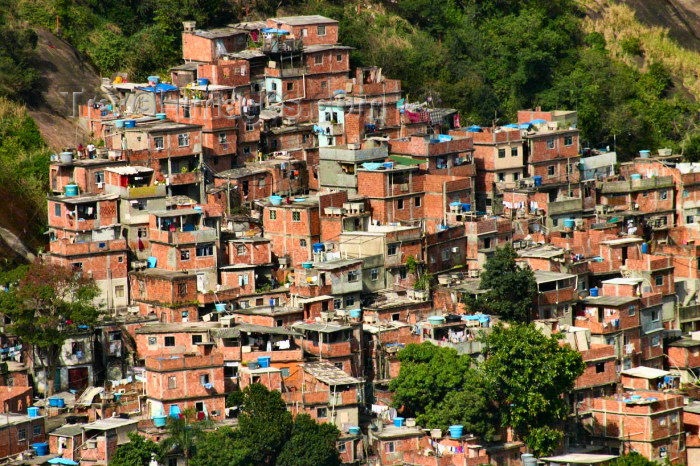
Suddenly the helicopter swoops down on the ravaged dwellings of the favela clinging to the mountainside, a slum of unimaginable proportions and a misery for anyone condemned to live there. For them the Olympics belong to a different world, a world they can hardly imagine. For them the luxury is clean running water and food on the table.
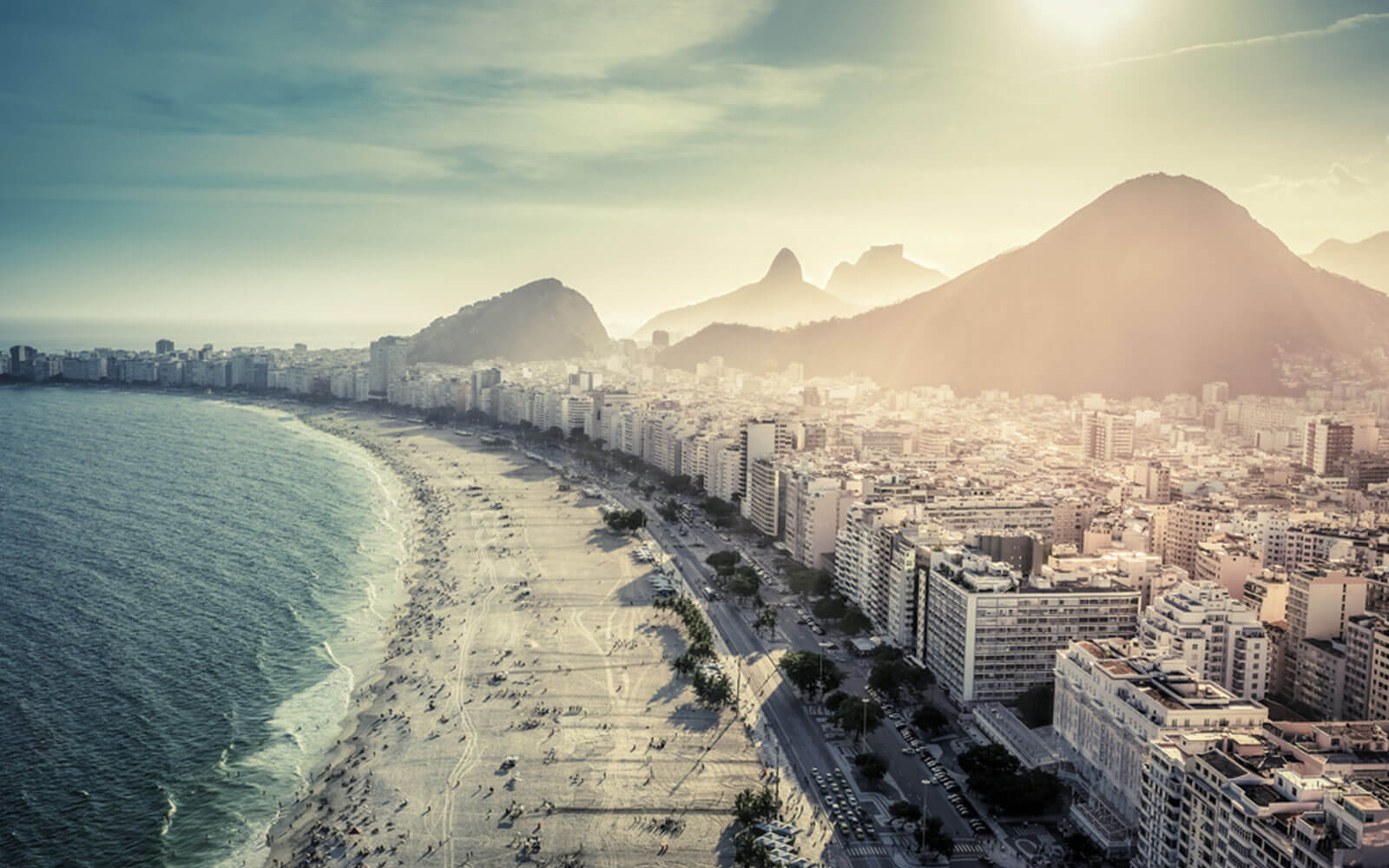
The road hugs the loverly beaches fringing the mountain which dominates the landscape. The heavy tropical foliage deep greens contrasting with the white sand and the blue water. A paradise if one didn't know better.
The local population have been protesting about the billions spent on the games when their city is bankrupt and can't pay for services to the ordinary citizen.  Clean water, electricity, food on the shelves, are all in short supply as this mega show takes over their town. It's when capitalism and big business come to town and squash the rights of the individual, when Coke and Niki swallow all the available resources, obliterate our collective sensibilities and steamroller their imprint on everything, leaving little behind other than a vivid memory as, in a couple of weeks the show skips town to leave the people to pick up the pieces of their lives again.
The surf tumbles in bringing the large rollers crashing onto the beach, the sunbathers lie with little thought for the cycle race passing a hundred yards away. The sun worshipers glaze their bodies, turning as if on a spit, they become comatose in the heat, cooking their flesh to a turn, oblivious of the long turn damage of a deep tan.
The contrasts are all around. The sun and the sea, the rich and the poor, those who count themselves special and those who specialise in just staying alive.
Rio is the extravagant face of mans desire to set himself apart, to signal to others that he/she counts more than the next person.
Be it the curves and exposure of of the girls on the beach in Ipanema, or the Ferrari set, drifting about strutting their stuff in their red machines. The restaurants, full of expense accounts and overpriced food, the special service expected from the hotel staff, the acknowledgement that the client belongs to a special exclusive breed, they have plenty of money.


 And all the time the spectre of the favelas haunting the scene. 

Corbyn v Smith


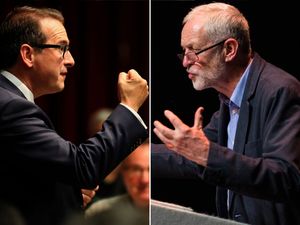
Having watched the first debate between Jeremy Corbyn and Owen Smith I have been struck for the first time by the woodenness of Corbyns debating skills.
I have listened to him in the past from his position on the back benches in Parliament argue with genuine passion about some cause or other he was espousing. He stood out from the front bench Labour leadership who always seemed to be arguing over peripheral issues making them sound more like that part of the Tory family who come over at holiday time  but are seen as the outcast in terms of real Tory values. 
Brought up under the shadow of Tony Blair who sang from the centre left of the Tory party hymn book a large section of the parliamentary Labour Party seemed to argue not with their hearts but because they were paid to do so. Their rhetoric was just that, oratory eloquence but without much bite or passion.
Corbyn was a man cast in the old mould, "a man of the people" who had conviction and wasn't about to tack away when a political squall blew up.
Perhaps his views on disarmament were a trifle simplistic, seeing mankind as being more benign than they are, he wished for a better arrangement putting all his hopes in Plan A with little thought to Plan B. 
Never the less he was a breath of fresh air after the moribund performance of Labour in the face of UKIP and the Tory Party.
Corbyn has been under tremendous pressure not only from the opposition but hurtfully from where he should least expect it, his own parliamentary  colleagues. When your own family engage in giving you a kicking, it must make you despair. He of course was never one of them and when his name went forward as a fourth candidate, a sort of sop to the left, no one thought he had a chance. Somehow his oratory in the towns and villages across the country struck a cord and a following such has not been seen in parliamentary circles of any colour for a long time, denying the paid up MP their assumption of power. 
The Corbynistas as they became known, have been remarkably loyal in the face of some scurrilous reporting in the press and media. A none stop onslaught of denigration and ridicule has been been heaped on his head, an example of the dirty tactics paid out in politics, particularly if you are seen to be 'anti status quo'.
The contest within the Labour Party as to who should be leader is like the BREXIT debate, subject to interpretation. The MPs don't like him, whilst the rank and file think he is refreshing, a man cut from their own cloth.
The debate to see who should lead the party, Corbyn or the MPs choice, Owen Smith, a little known Welsh MP who seems to have come out of nowhere opened yesterday.
Watching the first debate I was surprised to hear how resoundingly socialist Smith was and how resolute he sounded in the way the Blairites had become trite. He took the fight for the countries 'resources' back into the towns which are struggling to exist, he turned away from the metropolitan straight jacket of being London centric. He wasn't afraid to mention taxation and making those who can pay, pay. He didn't shy away from the mantra that the city pages make of taxation and the dangers of losing all our native talent abroad he said, as the BREXIT referendum vote proclaimed, "what will be will be", "don't be afraid of your own shadow" "stand tall and believe in what you feel is right".
Corbyn seemed, as I said wooden in his responses. He appeared to be consulting his notes, even reading from a prepared script. He had none of the open oratory, none of the spontaneity, he didn't engage the audience with eye contact, he seemed shut off in his ideological space.
It's this taciturn trait where he seems to reserve communication for his ideological bed-fellows, communication which is rich in motivation but remote unless you are plugged in to what his beliefs are.
So the question is does he have the charisma to sell his policies to the public or should the party look elsewhere for leadership. One of the benefits of the turmoil of the last few months in the Labour Party has been that it has shook up the party and dislodged some of the old wood that had been hanging on since the fall of the Blair/Brown pact. The old sound bite crew who wouldn't have been able to espouse an original thought if they ever had one. 
I was impressed by Owen Smith and look forward to see how he projects himself in the debates to come.


Friday, 5 August 2016

The modern anarchist

 The anarchists are on the march, traffic has rolled to a halt and passengers attempting to catch a plane at Heathrow are up in arms.
The definition of an anarchist is one who creates chaos in the matters of the state.


 Another definition is that an anarchist is a person who has lost hope in political solutions to right a wrong and seeks solutions from the bottom up, taking control out of the hands of the establishment. The methods are usually seen as antagonistic to the status quo and therefore shunned by the ordinary man in the street as well as the established forces within the community. Given the top down structural nature of the society the pressure for answers or even an acknowledgement that their cry is being listened to, develops a schism which leads to desperation. 
The Heathrow protest is about racism and the belief that matters which effect black people are not as important to the country as they should be. Stopping the traffic, chaining yourself to what ever is solid and therefore holding up for as long as you can, frustrating the march of people going about their business people ignorant of the dilemma you see around you. 
The face of the anarchist is usually one of the unwashed, pin pierced, undernourished freaky people who we pass by each day, casting hardly a glance, afraid of what we see.
Society is made up of many faces and many fits. There are as many misfits of course and as we become conformists, relying on our smartphone to feed us up to date information, ignoring the fact that sadly the information is flowing from much the same source so that we all imbibe, much the same story.
Once upon a time we sourced our story from our own, 'hands-on' experience. It was unique to us and actually played out as our own 'back story'. We developed a tendency to evaluate the world through our own eyes and come to our own conclusions. We kept our distance as individuals not because of any distrust but because proximity bent our sense of judgement, (like large bodies distorting and bending the rays of light) and we instinctively thought  it was vitally important to come to our own conclusion.
The modern day anarchist unlike the famous dissenters in the 19th and 20th century have less of a single cause such as the State and all its organs but rather the world wide confederation of global capitalism, structures such as Wall Street the bureaucracy of the EU and the totalitarianism of Russia and China.
Their angry militant faces should remind us of our 'indifference' to virtually everything which we, hedonistically don't value.

Allahu Akbar


 So the game in town now, is to claim that these people who shout Allahu Akbar (God is great) as they blow themselves up, or submit to a hail of bullets having committed some atrocity, that they are mentally unbalanced and therefore our supine western media now claim that these people are mentally unsound and therefore, in an oblique way, they are victims.
The politician recognising the deep hole he has dug in the fabric of our society by encouraging people from all over the world to come over and mix, believing that in so doing some sort of osmosis would turn us all into tolerant, benign citizens, has backfired big time. The politician, he/she, have of course  no idea what to do now. 
Never having understood the power of religious conviction, politicians who seem to hold no long term convictions of their own, other than re-election, can only wring their hands whilst a "commoner " in  Bradford would say, "I told you so and have been telling you so since 1968".
The difference between theory and practice is as strong as ever but 'we', sorry, 'they' have gambled with the taut nature of what balances and holds a nation together. Numbers count, identity counts, wealth counts, recognisability counts, and above all, the collegiate group nature, the bond which each feels for the other, beyond the familial.
How can we keep a lid on this phenomenon, this marginalised religious based hatred when the common cause lies in the writings and the interpretation of the Quran.
Admittedly it is only an extreme, ultra-orthodox Wahabi sect that lead the onslaught against the infidel (you and me) and yes you could describe then as having mental problems. 
They would supposedly say that they are gifted with the true clarity, manifest from gods teaching through his holy book and it's we who are mentally disturbed.
The difficulty is that there is a subtle attraction for young struggling Muslims, particularly growing up in the Sodom and Gomorrah of the West with its 'anything goes' mentality. Our own youth who on reaching the bottom, stay there. The young Muslim has his religious book and his community, which itself conforms to a rigorous observance unknown within the Christian community. The Imam (depending on the Mosque) will highlight the contradictions in life style and as is the logic of youth, they want to go and find out for themselves.
Returning home with a religious ideology firmly in place it's easy to see how we might question their mental probity but remember, they also question ours !!