Monday, 10 August 2015

At prayer


What would it be like to pray five times a day, every day. To have the surety that praying has a purpose in ones own life.
For an atheist the compact with God is broken, God doesn't exist and the expression of faith is of no relevance to the business of everyday life.


But what if ones everyday life was regularly punctuated with an intense interaction, through prayer,  a conversation about ones self and ones place and purpose in the world. Not the small talk but the important stuff which you are unsure about.
What if the prayer was so fundamental, a prop that without it you become rudderless and that the concept of the god you are praying to is so strong you believe implicitly in his scripture, so that much of the doubt we have about our lives and the ending of our lives is removed by a simple act of faith.
Of course in a society where the heat and the structure of the day is much slower, then the act of praying is part of that rhythm of life and folds into the space and speed which is all around. The harshness and the tenuous nature of living makes death a close companion and our frailty on earth makes life beyond death so much more enticing and believable. 
In the busy non stop action of a western existence where we are protected by systems such as hospitalisation if you fall sick or simple sanitation is taken care of by the utility company then the pace of living is generated, not so much by oneself but by the needs of others. One becomes a very small widget in a vast jigsaw of activity. Praying under these conditions takes on a whole different meaning since one becomes an outsider, stopping the clock as it were to do something very personal.
The society over here has become very benign towards the needs of minorities. For all our sins we have accepted the cultural variations and needs and so when we have to wait whilst some one is praying so we can access a room or have answered a question which only the person praying can answer, we take this relatively new phenomena in or stride. Perhaps we wonder why a person in a business environment needs to absent themselves 5 times during the day and perhaps we become a little frustrated if our own breakneck pace is interfered with but on the whole we come to terms with praying and its importance in a way which was not something we thought about a decade or two ago.
Is it right. Well who can say. Is it inconvenient. Well yes but in the scale of things does it rather say much more about our own lives and the stressful pace we drive ourselves at, in worshipping a different God, the god of consumerism.

Thursday, 6 August 2015

Kids Company


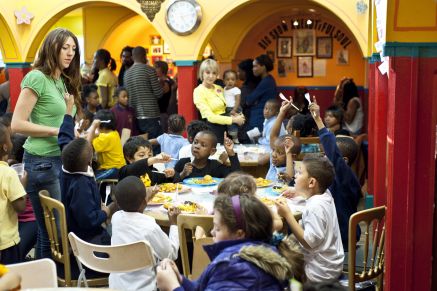
We have no idea of how some people live and get by day to day. 
With the closure of Kids Company, a charity which fed a need for street children and young adults who have no real home life and had become reliant on the Charity as a home and an environment in which people cared for them  their future is very bleak.
The damage which the 24 hour, 7days a week, single parent, and over stressed married parents unable to play the crucial part of being parents, devolve to the children who are lost in a jungle.


The social welfare system which is being asked to take up the slack is unable to cope with the problem. Its bureaucratic, box ticking, 9 till 5 approach falls far short of the needs of a youngster who has no one to rely on other than the gang or a pimp.
The social welfare is organised like the NHS it does not treat patents, patents are simply an entry in the system, sometimes the list of ailments are treated as if they belong to separate bodies, unconnected to the person who's name is at the top of the form.
The Kids  Company picks up the pieces of an ailing society. 
Young people who have never known the security of proper home life and they become the natural kindling for a life of crime or prostitution. Its here that the charity seeks to provide a semblance of home and gives the guidance of a parent.
The Ministers and the Civil Servants who have been the conduit for funding have been all over the place in their pronouncements. On the one hand they say the the charity "does a marvellous job" and then cut off funding because "the money has not been well spent".
And so we have the age old conflict between the desire for a conventional business model, with that of running the desperately uneven business of providing for damaged youngsters, who it should be acknowledged, are the responsibility of a society which has become so distorted by economic need, fuelled in the first place by the ease of credit and the artificial manufacture of a 'consumer driven society'.
The money involved in Kids Company is minuscule when compared to the  ordinance  dropped on civilians in the Middle East or the bonuses paid to bankers and footballers. The wastage on government IT systems makes the running of Kids Company like a drop in the ocean but then this is the skewed set of values we now have, as government back off from any of the roles which I for one feel the government should be a front row player.

London, East of the City


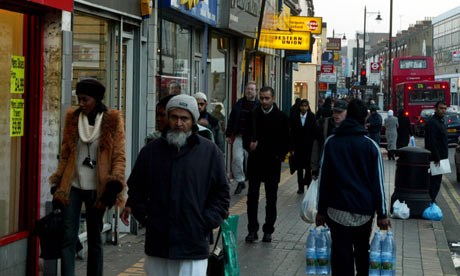
It's a warm day as the inhabitants of East Ham in London begin to shake off the night before.
A city environment is so different to the relatively countrified living I experience in Bishops Stortford. 
The trees, fields, and the farms are within a stones throw of my house and one is continually in touch with nature in your normal day. 
Not so the city life.  Pavements, buildings, back to back housing, streets carpeted with cars and pedestrians negotiating their way through the throng. The market is open, the traders shout their produce as the women shuffle in to purchase what ever. There is always noise. The buses, cars and lorries all competing for a patch of space, the continuous pressure of finding parking and the frustration of the traffic jam contribute to a constant buzz, a mental contest in which there are no winners.
The street outside the pub is hosed down after the shenanigans of last night the broken glass swept up as a different clientele takes over.
People live an artificial life at the best of times but city life is artificiality squared. It turns people into pygmies, it shrivels and dehumanises as they drag their tired bodies from pillar to post, from fast food counter to the betting shop.
Of course there are two cities. The City of London has within its boundaries many Theatres, Clubs, Expensive Shopping outlets plus the iconic sights of The Establishment to attract those who can afford to live there and who increasingly, do not have English as a first language. 
The other city was always off-piste and clouded by poverty. A 'holding stable' for undernourished people both educationally and culturally who were not of the kind the other 'city' rubbed shoulders with but who were essential to do the work they did not wish to dirty our hands with. 
The people who live there in East London, have changed in character. From  the strong social structure which the nursery rhyme of those who lived within the sound of Bow Bells were known, The Cockneys,  now can only be described as 'multicultural' with little in common with their predecessors.
The call to prayer has superseded the early morning market trader and the distinguishing mark is now more Eastern than Anglo. 


Travelling in North Africa


I'v been reading a book by an American women, Nina  Sovich called "To the Moon and  Timbuktu". It's a story of a woman's perspective travelling in North Africa, a journey in which she try's to resolve her conflicting  desire to pull away from the cloying conformity of Paris and her ambivalence to her containment within her marriage to a Frenchman.

The description of her living and travelling amongst people who in many ways are the antithesis of her upbringing, the men traditionally machismo, the women bonding in their femininity. Gender role play, each living a parallel existence, is fascinating.
A description by her when she was out one morning, caught my attention as being the curse of Africa.
I quote :-
Then we enter the old colonial quarter. The houses are beautiful, pale yellow bungalows with terracotta roofs and floor to ceiling windows,and wooden shutters to keep out the heat.
Most are falling apart which adds to the melancholy air. Sheep wander amongst the ruins and creeping vines burst through the fallen roofs. Squatters have pitched burlap tents and planted vegetable gardens in the front lawns of the formally grand houses. Children chip away at the plaster walls with sharp metal sticks. A few properties have been put to good use and turned into nurseries run by women who sell tomatoes and Mellon vines, but few if any of the houses are still inhabitable. By the river French expats have resorted some bungalows and those are truly lovely.
 
I'm about to mention this when Amadou (her guide) makes an angry motion toward one of the houses and says with bitterness, "The French. They control everything in this country".
This is symptomatic of Africa. A blame game is always to hand with well meaning but misguided people wishing to make excuse after excuse for the undeniable misuse of assets simply because they didn't fit the pattern of life which the indigenous people feel ancestral and to which they cling irrespective of the cost.

Tuesday, 4 August 2015

Goldman Sachs. Mater of the Universe


The bank that runs the world. Goldman Sachs.
I have often written of my distaste of the power and the lack of ethics, the contempt which this powerful Wall Street Bank exhibits towards the world at large.
Their tentacles are everywhere. Placement men in the highest offices throughout the western financial and political system, names which are familiar to us all. 
Mario Draghi the current President of the European Central Bank. Romano Prodi an Ex President of the ECB. Mark Carney the current Governor of the Bank of England. Henry Paulson the US Treasury Secretary. Robert Rubin US Treasury Secretary. And so many others !!
Imagine the influence of sharing the Goldman boardroom and then departing to hold crucial senior positions across the western world. No wonder Goldman's  hands are all over the events before and since the financial crash. 
The most recent event and probably the most politically damaging (if they weren't so Teflon coated) has been their tampering with the Greek books when they were applying to join the EU.
Part of their ruse was to evoke a slight of hand when the Greeks needed a loan to cover their bills in 2010 the amount which was called for was doubled by illicitly offering a non accountable lone which mirrored the accountable lone but which attracted a substantially higher rate of interest.
And so began the Greek financial tragedy. Like a parent winning favour with their child by plying them with sweet drinks the dental bill was still to come.
Goldman Sachs are evil and have no scruples. Laws which would trip the man in the street do not apply in the rarefied atmosphere of Goldman's Boardroom but what really worries me is that there are so many Goldman Sachs look alike's posted into all our financial centres who have learnt their trade in 200 West St NY.

Life after school


Last week we were introduced through the media to a team of Chinese teachers who had come over for a short stay to teach kids in a Comprehensive School.
Listening today to a program discussing the comments made by the teachers about their findings regarding the pupils and the relationship between the pupil and teacher was absorbing if not a little sad. According to the Chinese teachers the children were disruptive, lazy, they showed no respect, and didn't want to learn. 
We feel in our bones looking at the poor behaviour amongst young adults that somehow we have failed so many of our children. The concept of "instilling" education has been lost in favour of trying to convince the kids that they should take notice of what is taught. The incredulity that we don't allow the children a semi free hand on the basis that too much interference with the intrinsic make up of a child is bad and that it is more important for the individual to flower naturally, was the response not only of the "program presenter" but by many who called in.
Of course we are talking of State Education, not the Private Sector Education since in the Private (Public) school system, discipline is accepted as an educational component along with competition amongst the pupils in terms of "inter-house, inter-school, and importantly academic success. This ethos of a Private School is one of comparison and achievement and it sets the pupils on the path to handle the rigours of life in the workplace.
The touch stone, when the Grammar School and the Secondary Modern School were merged into Comprehensives, was to give an opportunity to children who hadn't passed the entrance to Grammar Schools a second chance. Unfortunately hand in hand with that laudable aim, two things happened. General academic standards dropped to the disadvantage of the clever student who was no longer challenged plus the ethos of the school changed towards focusing on the less academic student. The concept of finding the "special attributes" which it was believed every student had meant the teachers job became as much that of a social services function as it was to be a teacher.
The pupil was judged not as person who would absorb the academic subjects which the teacher was trained to teach but as someone who needed rescuing and rehabilitating, turning them into someone who could progress into society in general. The average and below were the benchmark and we have suffered "as a nation economically" from the ideological game shift which occurred in the 60s.
This is not to dismiss the achievement of giving many individuals a second chance but at what cost.
If society is bent on rescuing all and sundry, as it should, it would do better to devise ways and means that do not rely on making the mistake of judging everyone as equal in their ability to grasp the importance of education. I am a firm believer in not only substantially increasing the expenditure but also develop better ways to educate the average and below average pupil. 
With the Internet and the use of electronic pathways into the school, richer more relevant subject matter could be developed (Open University Style) and piped in to capture the imagination of the street wise kids. Lower class sizes should be the norm for the less well equipped kid so that they receive the specialised attention they need but above all we must never loose sight of the aim of the National school system. To teach a curriculum based on life after school.

I had a farm


"I had a farm in Africa".
And so it began that almost mystical tale "Out of Africa" made into a beautiful movie with Meryl Streep.
Reading the opening passage is like reading that memorable opening sentence from "Cry the Beloved Country"by Alan Paton.  "There is a loverly road that runs from Ixopo into the hills".
Each some how symbolises and draws you in to the story especially and perhaps only if you have spent time in Africa. They say that like no other place, Africa becomes a part of you with its deep sense of life and death its beauty and its vast space. 
The tribal outposts where Paton contrasts the debauchery of Johannesburg with the simplicity and customs which can make a people dignified and respectful but which are soon destroyed by city life.
In Karen von Blixen's portrayal of her farm and the African people who worked for her on the farm, she has an almost hypnotic connection to the land, its animals and the people. But it's her loneliness in living in an almost parallel existence with the native people she grew to love which was palpable. The sights, sounds and smell of the Serengeti are evoked in our minds as being like some living system, a being, of which she was on the periphery, an observer without much control.

Of course she was a romantic like Paton. She saw what was in her heart and like him paid the price for unearthing sentiments that were out of place in such a vast tapestry.

Never the less, in his sentiment, and by setting the books opening stanza. 

"Towards the grass covered hills, that are lovely beyond any singing of, the road climbs to Carisbrooke. You might hear the forlorn cry of the titihoya, whilst, below in the valley of the Umzimkulu".

For me both books set the scene for an enchanted journey into a land of inscrutable promise and damming failure. A land of beauty and hardship of pragmatism and inspiration, a land of misunderstanding but also of deep forgiveness.